US Attacks Venezuela: Trump Claims Capture of President Maduro and His Wife

Global attention has shifted sharply toward South America after explosive claims emerged that the United States attacked Venezuela, followed by a dramatic statement from former U.S. President Donald Trump. According to Trump, U.S. forces allegedly captured Venezuelan President Nicolás Maduro and his wife during a rapid military operation. As a result, the announcement triggered widespread shock, diplomatic uncertainty, and intense debate across international political circles.
Although official confirmations remain limited, the implications of such an action would be enormous. Therefore, understanding the context, motivations, and possible consequences becomes essential.
Background of US–Venezuela Relations
To fully grasp the significance of the reported attack, it is important to examine the long-standing tensions between Washington and Caracas. For decades, the relationship between the United States and Venezuela has been shaped by ideological conflict, economic sanctions, and power struggles.
After Hugo Chávez rose to power in 1999, Venezuela adopted a socialist agenda that directly challenged U.S. influence in Latin America. Consequently, relations deteriorated rapidly. When Nicolás Maduro succeeded Chávez, tensions intensified even further.
Economic Sanctions and Political Isolation
Over the years, the United States imposed sweeping sanctions on Venezuela. These measures targeted oil exports, financial institutions, and key government officials. As a result, Venezuela’s economy suffered severe contraction, hyperinflation, and widespread shortages.
Meanwhile, Washington accused Maduro of election fraud, human rights violations, and corruption. Therefore, the U.S. recognized opposition leader Juan Guaidó as interim president in 2019, deepening the political crisis.
Trump’s Hardline Stance on Venezuela
During his presidency, Donald Trump consistently took a confrontational approach toward Venezuela. He repeatedly stated that “all options were on the table,” including military intervention. Moreover, Trump framed Venezuela as a threat to regional stability and U.S. national security.
Because of this background, Trump’s recent claim about the capture of Maduro did not emerge from nowhere. Instead, it followed years of aggressive rhetoric and covert operations.
The Alleged US Military Operation
According to Trump’s statement, U.S. forces carried out a swift and targeted military action inside Venezuelan territory. He claimed the operation aimed to neutralize the leadership of what he described as an “illegitimate regime.”
If true, such an operation would represent one of the most dramatic U.S. interventions in Latin America in modern history. Therefore, analysts immediately questioned its legality, execution, and international consequences.
Claims of Maduro’s Capture
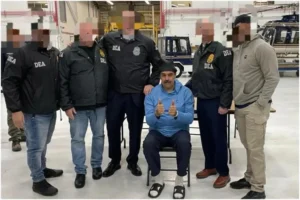
Trump asserted that President Nicolás Maduro and his wife, Cilia Flores, were captured alive and taken into U.S. custody. However, Venezuelan state media quickly denied the claims. Additionally, Maduro later appeared in a televised address, casting doubt on Trump’s statement.
Nevertheless, confusion spread rapidly, especially on social media. As a result, misinformation and speculation flooded global platforms.
Information Warfare and Strategic Messaging
In modern conflicts, information often functions as a weapon. Therefore, Trump’s announcement could represent a strategic communication move rather than a factual disclosure.
By making such claims, Trump may aim to influence political narratives, energize supporters, or pressure foreign governments. Consequently, analysts urge caution before accepting any single version of events.
Reaction from the Venezuelan Government
The Venezuelan government condemned the alleged attack as an act of aggression and imperialism. Officials accused the United States of violating international law and attempting regime change by force.
Furthermore, Caracas vowed to defend its sovereignty and called for emergency meetings with regional allies. As a result, tensions escalated rapidly.
Regional Response in Latin America
Latin American nations reacted cautiously. While some governments criticized U.S. interference, others remained silent or called for restraint. Countries like Brazil and Colombia expressed concern over potential instability.
At the same time, regional organizations urged dialogue instead of violence. Therefore, diplomatic channels remained active despite the uncertainty.
Global Powers React
Major global powers quickly responded. Russia and China condemned any potential U.S. military action, emphasizing respect for sovereignty. Meanwhile, European leaders called for independent verification of Trump’s claims.
Because Venezuela holds strategic oil reserves, global markets also reacted nervously. Oil prices fluctuated as investors assessed potential supply disruptions.
Legal Implications Under International Law
Under international law, a unilateral military attack without United Nations authorization raises serious legal concerns. Therefore, experts questioned whether the alleged operation violated the UN Charter.
Additionally, the capture of a sitting head of state would set a dangerous precedent. Consequently, legal scholars warned of long-term consequences for global governance.
Domestic Political Impact in the United States
Domestically, Trump’s claims sparked intense political debate. Supporters praised decisive action against authoritarian regimes. Conversely, critics accused Trump of spreading misinformation and risking war.
Moreover, lawmakers demanded transparency and official confirmation. As a result, pressure mounted on U.S. institutions to clarify the situation.
Humanitarian Concerns
Any military escalation in Venezuela would worsen an already severe humanitarian crisis. Millions of Venezuelans have fled the country due to economic collapse. Therefore, additional conflict would likely increase displacement and suffering.
Humanitarian organizations urged all parties to prioritize civilian protection and humanitarian access.
Oil, Energy, and Strategic Interests
Venezuela possesses one of the world’s largest proven oil reserves. Consequently, energy security plays a major role in geopolitical calculations.
If U.S. intervention disrupted production, global energy markets would feel immediate effects. Therefore, strategic interests extend far beyond regional politics.
The Risk of Escalation
Perhaps the most alarming aspect of the situation involves escalation risks. A U.S. attack could trigger retaliation, proxy conflicts, or cyber warfare.
Additionally, alliances with Russia and Iran complicate the strategic landscape. Therefore, miscalculation could lead to broader confrontation.
Historical Lessons from Past Interventions
History offers cautionary lessons. Past U.S. interventions in Latin America often produced unintended consequences. Regime change rarely resulted in stability.
Therefore, analysts emphasize the importance of diplomacy and multilateral solutions.
Media Responsibility and Verification
Given the gravity of the claims, media organizations face a responsibility to verify information carefully. Sensational headlines without confirmation can inflame tensions.
As a result, reputable outlets stress independent sources and official statements.
The Role of Social Media
Social media amplified the story within minutes. While platforms enable rapid information sharing, they also spread rumors.
Therefore, critical thinking remains essential for audiences worldwide.
Possible Scenarios Going Forward
Several scenarios could unfold. The claims may prove false or exaggerated. Alternatively, covert actions may surface gradually.
In the worst case, open conflict could erupt. Consequently, diplomatic engagement remains crucial.
Calls for International Mediation
International bodies, including the United Nations, may step in to mediate. Neutral investigations could help de-escalate tensions.
Furthermore, dialogue could prevent further destabilization.
Public Opinion in Venezuela
Inside Venezuela, reactions vary. Some citizens distrust U.S. intentions, while others oppose Maduro’s rule. Therefore, public sentiment remains deeply divided.
This division complicates any external intervention.
Long-Term Implications for Global Politics
Regardless of the truth, Trump’s claims highlight how fragile global stability can be. Misinformation, power politics, and strategic rivalry intersect dangerously.
As a result, the incident may influence future diplomatic norms.
Conclusion: A Moment of Extreme Uncertainty
In conclusion, the claim that the US attacked Venezuela and captured President Nicolás Maduro and his wife represents a moment of extraordinary uncertainty. While facts remain contested, the geopolitical stakes are undeniably high.
Ultimately, truth, restraint, and diplomacy will determine whether this episode becomes a footnote or a turning point in international relations. Until then, the world watches closely, aware that words and actions at this level can reshape global history.