
Utara’DAILY : Trump’s Ambition to Take Over Greenland
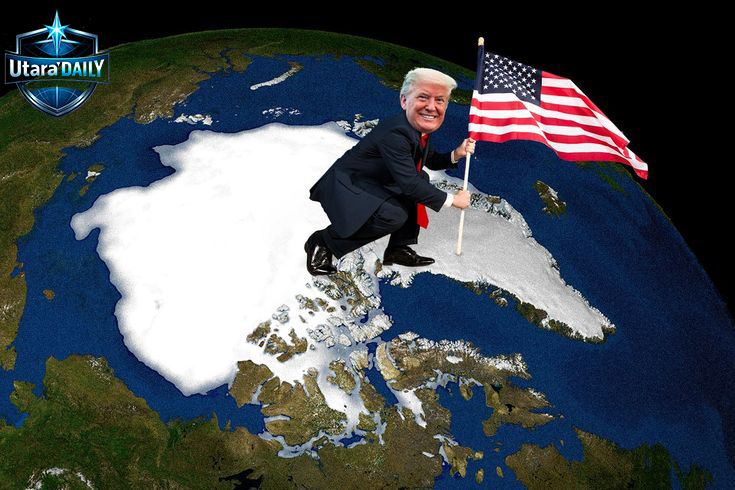
An Idea That Shocked the World
When news emerged that Donald Trump expressed interest in taking over Greenland, the global reaction ranged from disbelief to intense debate. Although the idea sounded unconventional, it quickly became a serious topic in international politics. Trump’s ambition to take over Greenland did not arise in a vacuum. Instead, it reflected long-standing geopolitical interests, strategic calculations, and shifting global power dynamics.
Moreover, the proposal challenged modern assumptions about sovereignty and territorial acquisition. In an era defined by diplomacy and international law, the notion of purchasing or controlling another territory felt outdated to many observers. Nevertheless, the discussion exposed deeper realities about global competition and strategic geography.
As the debate unfolded, it forced governments, analysts, and the public to reconsider the importance of the Arctic region.
Greenland’s Strategic Importance
Greenland occupies a unique position in global geopolitics. Located between North America and Europe, it serves as a critical gateway to the Arctic. Consequently, military planners and policymakers have long recognized its strategic value.
In addition, Greenland hosts vital shipping routes that are becoming increasingly accessible due to melting ice. As climate change reshapes the Arctic, new economic and strategic opportunities emerge. Therefore, control or influence over Greenland translates into long-term advantages.
Because of these factors, Trump’s interest highlighted strategic realities rather than mere personal ambition.
Historical Context of U.S. Interest in Greenland
The United States has shown interest in Greenland long before Trump. During World War II, the U.S. established military bases there to counter German influence. Later, during the Cold War, Greenland played a key role in early warning systems against potential attacks.
Furthermore, in 1946, the U.S. government even proposed purchasing Greenland from Denmark. Although Denmark rejected the offer, the attempt demonstrated that the idea had historical precedent.
Thus, Trump’s ambition revived an old geopolitical conversation rather than creating a new one.
Trump’s Strategic Mindset
Trump approached international relations with a transactional mindset. He often framed diplomacy in terms of deals, assets, and leverage. From this perspective, Greenland appeared as a valuable strategic asset.
Moreover, Trump emphasized national interest and security above traditional diplomatic norms. Therefore, his proposal aligned with his broader worldview, which prioritized tangible benefits over symbolic considerations.
While critics viewed the idea as impulsive, supporters argued that it reflected pragmatic thinking in a competitive global environment.
Economic Interests Beneath the Proposal
Beyond military considerations, Greenland holds significant economic potential. The island contains rare earth minerals, natural resources, and energy reserves.
As global demand for rare earth elements grows, access to these resources becomes increasingly important. China has invested heavily in this sector, raising concerns in Washington. Consequently, Trump’s interest also reflected economic competition.
In this context, Greenland represented not just land, but future economic leverage.
Climate Change and the Arctic Race
Climate change has transformed the Arctic from a frozen frontier into a region of opportunity. As ice retreats, shipping lanes shorten, and resource extraction becomes feasible.
Therefore, global powers increasingly compete for influence in the Arctic. The United States, Russia, and China all seek strategic positioning.
Trump’s ambition to take over Greenland must be understood within this broader Arctic race. It signaled recognition that future power may depend on Arctic access.
Denmark’s Response and Diplomatic Fallout
Denmark responded firmly to Trump’s proposal. Danish leaders emphasized that Greenland was not for sale. This response underscored modern principles of sovereignty and self-determination.
Moreover, the proposal strained diplomatic relations. When Denmark rejected the idea, Trump reportedly reacted strongly, canceling a planned visit. This reaction intensified media attention and diplomatic tension.
As a result, the episode illustrated how unconventional proposals can disrupt established alliances.
Greenland’s Voice and Self-Governance
Importantly, Greenland is not merely a Danish possession. It enjoys a high degree of self-governance, with its own parliament and leadership.
Greenlandic officials rejected the notion of being treated as an object of negotiation. Instead, they emphasized their right to determine their own future.
This response highlighted a critical issue: modern geopolitics increasingly recognizes the agency of local populations.
International Reactions and Global Debate
International reactions varied widely. Some leaders dismissed the idea as unrealistic. Others quietly acknowledged the strategic logic behind it.
Meanwhile, analysts debated whether the proposal reflected serious policy or political theater. Regardless, the discussion elevated Greenland’s global profile.
As debates spread, the episode revealed how symbolic gestures can spark serious geopolitical conversations.
Sovereignty in the Modern Era
Trump’s ambition raised fundamental questions about sovereignty. In today’s world, territorial acquisition through purchase or coercion faces strong legal and ethical barriers.
International law prioritizes self-determination and territorial integrity. Therefore, any attempt to “take over” territory invites legal scrutiny.
This reality explains why the proposal generated resistance despite historical precedents.
The Role of NATO and Transatlantic Relations
Denmark and the United States are both NATO members. Consequently, the proposal complicated alliance dynamics.
NATO relies on trust, cooperation, and shared values. Actions perceived as dismissive of sovereignty risk undermining unity.
Thus, Trump’s ambition tested the balance between national interest and alliance solidarity.
Media Coverage and Public Perception
Media outlets worldwide covered the story extensively. Headlines often emphasized the shock value, while deeper analysis explored strategic implications.
Public opinion reflected polarization. Some Americans supported bold strategic thinking. Others criticized the idea as damaging to international credibility.
This divide mirrored broader debates about Trump’s foreign policy approach.
Comparing Past Territorial Ambitions
Historically, great powers expanded territory through conquest or purchase. However, the post-World War II order shifted norms.
Decolonization, international institutions, and legal frameworks now limit such ambitions. Trump’s proposal clashed with these norms, which explains the strong reaction.
Nevertheless, history shows that strategic interests often persist beneath changing norms.
China, Russia, and Arctic Competition
China has labeled itself a “near-Arctic state” and invested in Arctic infrastructure. Russia, meanwhile, maintains extensive Arctic military capabilities.
These developments concern U.S. strategists. Greenland’s location offers surveillance, defense, and logistical advantages.
Therefore, Trump’s ambition reflected concern about rival powers gaining influence near North America.
The Domestic Political Dimension
Domestically, the proposal also served political purposes. Trump’s unconventional ideas often dominated media cycles, energizing supporters and critics alike.
By proposing bold moves, he reinforced his image as a disruptor. This strategy appealed to voters who favored assertive leadership.
Thus, domestic politics likely influenced the timing and presentation of the idea.
Diplomatic Style and Communication
Trump’s direct communication style amplified controversy. Rather than testing ideas quietly through diplomacy, he often voiced them publicly.
This approach increased transparency but reduced flexibility. Once public, proposals became political statements rather than negotiable concepts.
Consequently, the Greenland episode demonstrated how communication style shapes diplomatic outcomes.
Lessons for Future U.S. Policy
The episode offers lessons for future policymakers. Strategic interests require careful articulation and consultation.
While bold thinking can spark innovation, diplomacy demands sensitivity to allies and local stakeholders.
Balancing ambition with respect remains essential in global leadership.
Greenland’s Future Beyond the Debate
Regardless of Trump’s proposal, Greenland’s strategic importance will continue to grow. Climate change, resource demand, and security concerns ensure ongoing attention.
Greenland’s leaders seek sustainable development and greater autonomy. Therefore, future engagement must respect their priorities.
Any external interest must align with Greenland’s own vision.
The Symbolism of Power and Territory
Territory symbolizes power, identity, and control. Trump’s ambition tapped into these symbols, reigniting debates about national strength.
However, modern power increasingly derives from influence, technology, and cooperation rather than land acquisition.
This tension defines contemporary geopolitics.
Academic and Expert Perspectives
Experts remain divided. Some view the proposal as strategically sound but diplomatically flawed. Others see it as a misunderstanding of modern norms.
Despite disagreement, most acknowledge Greenland’s importance. The debate itself reflects healthy scrutiny of strategic priorities.
Thus, the episode enriched policy discourse even if it produced no immediate change.
A Broader Reflection on Global Ambition
Trump’s ambition to take over Greenland serves as a case study in modern ambition. It reveals how old ideas resurface in new contexts.
Globalization, climate change, and competition reshape strategic thinking. Leaders respond differently based on ideology and style.
Understanding these dynamics helps explain unexpected proposals.
Utara’DAILY’s Editorial Perspective
Utara’DAILY views this episode as more than a political curiosity. It represents a moment where strategy, symbolism, and diplomacy collided.
Responsible journalism examines underlying motives rather than focusing solely on controversy.
By providing context, Utara’DAILY aims to inform readers about deeper geopolitical realities.
Conclusion: Ambition Meets Modern Reality
Trump’s ambition to take over Greenland captured global attention because it challenged modern assumptions about sovereignty and power. While the proposal never advanced, it exposed enduring strategic interests and emerging global competition.
Ultimately, the episode demonstrated that ambition alone cannot override international norms. However, it also reminded the world that geography, resources, and security continue to shape global politics.
As the Arctic grows more important, Greenland will remain central to strategic debates—regardless of who leads them.