
Utara’DAILY: Thai Military Destroys Hindu God Statue on Disputed Border, Angering Cambodia
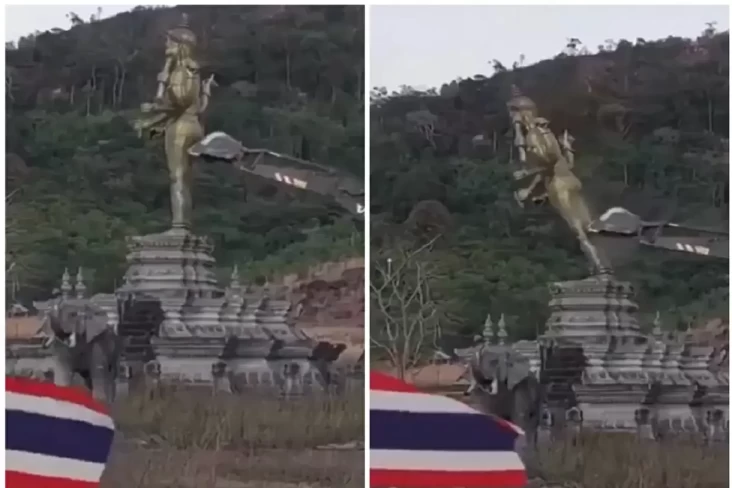
A Border Incident That Ignites Regional Tensions
A controversial incident along the disputed Thai-Cambodian border has triggered diplomatic outrage and cultural alarm. Reports confirm that the Thai military destroyed a Hindu god statue located in a contested border zone, provoking anger in Cambodia and reigniting long-standing tensions between the two neighboring countries. Although border disputes have flared before, this event carries deep cultural and religious significance that elevates the stakes considerably.
Moreover, the destruction of a sacred symbol extends beyond territorial disagreement. It strikes at the heart of cultural heritage, religious respect, and national identity. Consequently, reactions have spread rapidly across political, religious, and civil society spheres.
The Disputed Border: A Longstanding Source of Conflict
Thailand and Cambodia share a complex border shaped by colonial-era maps and historical claims. For decades, disputed areas near ancient temple sites have fueled diplomatic friction and occasional military clashes. Despite bilateral agreements and international mediation, unresolved boundaries continue to create flashpoints.
Therefore, any military action in these sensitive zones carries high risk. When cultural or religious symbols become involved, tensions escalate even faster, as emotions intertwine with sovereignty claims.
The Hindu Statue and Its Cultural Significance
The destroyed statue reportedly depicted a Hindu deity revered in Cambodian religious tradition. Hinduism deeply influenced Cambodia’s ancient civilization, particularly during the Khmer Empire, whose legacy remains central to national identity.
Consequently, statues and temples linked to Hindu mythology carry profound historical and spiritual meaning. The destruction of such a symbol therefore resonates as more than physical damage; it represents perceived disrespect toward heritage and belief.
Thai Military’s Explanation and Position
Thai military officials stated that the statue stood within a disputed zone and lacked authorization. According to their explanation, the removal aimed to enforce territorial control and prevent unauthorized constructions.
However, critics argue that such actions require diplomatic sensitivity. While border enforcement remains a sovereign right, the method and symbolism involved demand careful consideration. As a result, the military’s justification has failed to ease tensions.
Cambodia’s Immediate Reaction
Cambodian authorities reacted swiftly and strongly. Government officials condemned the act, labeling it a violation of cultural respect and an unacceptable provocation. Statements from Phnom Penh emphasized that the statue formed part of Cambodia’s cultural and religious heritage.
Furthermore, Cambodian leaders urged Thailand to issue an apology and called for international attention to the incident. The strong response reflects not only anger but also concern over precedent.
Public Outrage and National Sentiment in Cambodia
Public reaction in Cambodia intensified rapidly. Social media platforms filled with expressions of outrage, grief, and calls for accountability. Many citizens viewed the destruction as an insult to national dignity.
Additionally, religious leaders and cultural activists organized discussions and statements condemning the act. These responses demonstrate how deeply cultural heritage resonates within Cambodian society.
Religious Sensitivity and Symbolic Impact
Religious symbols carry emotional power. Destroying a statue associated with faith can inflame sentiments far beyond political boundaries. In this case, the statue’s destruction reverberated across religious communities, including those outside Cambodia.
Therefore, the incident highlights the importance of respecting religious symbols, especially in contested territories where symbolism often amplifies conflict.
Historical Precedents of Cultural Disputes
This incident recalls past disputes involving temples and artifacts along the Thai-Cambodian border. Previous confrontations around ancient temple complexes resulted in diplomatic standoffs and even armed clashes.
Learning from history, many observers warn that cultural disputes can escalate rapidly if mishandled. Consequently, restraint and dialogue become essential tools for conflict prevention.
Diplomatic Channels Under Pressure
Following the incident, diplomatic communication intensified. Cambodian officials requested urgent consultations, while Thai representatives attempted to manage fallout.
However, trust remains fragile. Without clear confidence-building measures, diplomatic engagement risks stagnation. Therefore, restoring dialogue becomes a priority to prevent escalation.
ASEAN’s Role and Regional Stability
As members of ASEAN, Thailand and Cambodia commit to peaceful dispute resolution. This incident tests ASEAN’s effectiveness in managing bilateral tensions.
Regional observers urge ASEAN to facilitate dialogue and promote de-escalation. Successful mediation could reinforce ASEAN’s credibility as a regional stabilizer.
International Law and Cultural Heritage Protection
International conventions emphasize protecting cultural and religious heritage, even in disputed territories. While sovereignty claims complicate enforcement, international norms encourage restraint.
Legal experts note that cultural destruction undermines reconciliation efforts. Therefore, adherence to heritage protection standards remains crucial.
Military Conduct and Civil-Military Relations
The incident raises questions about military conduct in sensitive areas. Civil-military coordination becomes essential to ensure actions align with diplomatic objectives.
Unchecked military decisions risk undermining broader national interests. Consequently, governments must maintain oversight and clear guidelines.
Media Coverage and Narrative Framing
Media outlets across Southeast Asia and beyond reported the incident extensively. Headlines emphasized cultural outrage and diplomatic fallout.
Responsible reporting remains essential to avoid inflaming tensions further. Balanced narratives help audiences understand complexity without amplifying hostility.
The Symbolism of Borderland Heritage
Border regions often host shared heritage sites. These spaces symbolize interconnected histories rather than rigid divisions.
Destroying heritage in such areas risks erasing shared narratives. Therefore, preservation can serve as a bridge rather than a barrier.
Impact on Thai-Cambodian Relations
The incident threatens to reverse recent efforts at improving bilateral relations. Cooperation on trade, tourism, and security may suffer if tensions persist.
Economic and social ties between border communities highlight the cost of escalation. Therefore, resolving the dispute benefits both nations.
Voices Calling for De-escalation
Despite outrage, many voices advocate calm. Scholars, religious leaders, and civil society groups urge dialogue and mutual respect.
These calls emphasize that heritage disputes require empathy and understanding rather than force.
Youth and Social Media Dynamics
Young people play a significant role in shaping discourse. Social media amplifies emotions quickly, sometimes spreading misinformation.
Therefore, responsible engagement and factual communication become essential to prevent escalation driven by rumor.
Lessons for Border Management
This incident underscores the need for clearer border management mechanisms. Joint committees, cultural mapping, and heritage protection agreements could reduce future disputes.
By institutionalizing cooperation, both countries can prevent similar incidents.
Cultural Diplomacy as a Solution
Cultural diplomacy offers a path forward. Joint preservation projects, cultural exchanges, and shared heritage recognition could rebuild trust.
Such initiatives transform conflict into cooperation, emphasizing shared history over division.
The Risk of Nationalist Escalation
Nationalist rhetoric can intensify crises. Leaders must balance domestic sentiment with regional responsibility.
Avoiding inflammatory language helps keep diplomatic options open.
Comparative Cases in Global Context
Globally, cultural heritage destruction often worsens conflicts. Lessons from other regions highlight the importance of early intervention and dialogue.
Applying these lessons could help Thailand and Cambodia avoid prolonged tension.
The Human Dimension of the Dispute
Beyond politics, ordinary people bear the consequences. Border communities rely on cross-border cooperation for livelihoods.
Escalation disrupts daily life, emphasizing the need for peaceful resolution.
Legal and Diplomatic Pathways Forward
Formal investigations, joint statements, and confidence-building measures offer practical steps forward.
Transparency and acknowledgment can ease anger and rebuild trust.
Utara’DAILY Editorial Perspective
Utara’DAILY emphasizes contextual, responsible reporting. By highlighting cultural, historical, and diplomatic dimensions, the publication aims to inform rather than inflame.
Such journalism supports constructive dialogue and understanding.
Long-Term Implications for Regional Peace
How Thailand and Cambodia handle this incident sets precedent. Respectful resolution strengthens regional stability, while escalation undermines it.
Therefore, choices made now carry long-term consequences.
Rebuilding Trust Through Respect
Restoring trust requires gestures of respect. Acknowledging cultural sensitivity and committing to preservation can ease tensions.
Mutual respect forms the foundation of lasting peace.
Conclusion: A Cultural Flashpoint Demanding Diplomacy
The destruction of a Hindu god statue by the Thai military on a disputed border has ignited anger in Cambodia and drawn regional attention. While territorial disputes persist, cultural and religious respect must guide actions.
Ultimately, diplomacy, restraint, and dialogue offer the only sustainable path forward. By prioritizing heritage protection and mutual understanding, Thailand and Cambodia can prevent further escalation and reaffirm commitment to peaceful coexistence.