
Utara’DAILY: Russia to Build Power Plant on the Moon in 10 Years
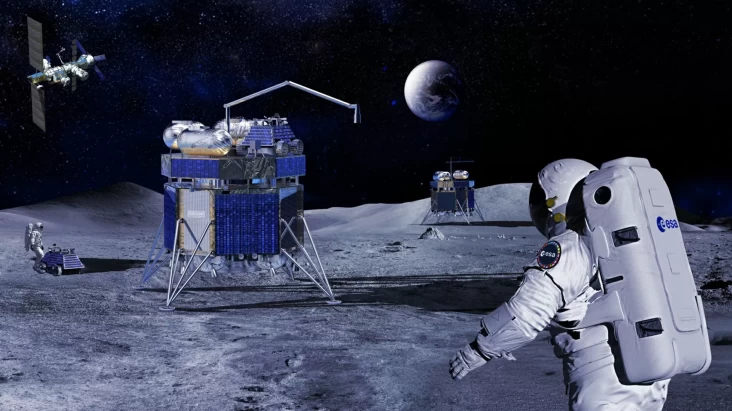
The global space race is entering a new and unexpected phase. Recently, Russian officials revealed an ambitious plan that immediately captured international attention: Russia aims to build a power plant on the Moon within the next ten years. Consequently, this announcement signals not only technological ambition but also a strategic shift in how nations view lunar exploration.
While space exploration once focused primarily on symbolism and scientific discovery, it now increasingly emphasizes infrastructure, sustainability, and long-term presence. Therefore, Russia’s lunar power plant proposal represents a decisive step toward permanent human and robotic activity beyond Earth.
This Utara’DAILY report explores the motivations, technologies, geopolitical implications, and challenges behind Russia’s bold lunar energy vision.
A New Chapter in the Modern Space Race
For decades, the Moon symbolized human curiosity and achievement. However, modern space ambitions extend far beyond flags and footprints. Instead, nations now pursue long-term lunar operations.
Russia’s plan to construct a power plant on the Moon highlights this shift. Moreover, it confirms that space competition has evolved into a race for infrastructure and strategic positioning.
Consequently, the Moon is no longer a distant object of exploration. Instead, it has become a potential hub for future space economies.
Why the Moon Needs a Power Plant
Power remains the foundation of all sustained activity. On Earth, energy enables cities, industries, and communication. Similarly, on the Moon, reliable energy will determine the success of long-term missions.
Solar power alone cannot meet all demands. Lunar nights last approximately fourteen Earth days. Therefore, energy storage and continuous supply become major challenges.
Russia’s proposed power plant aims to solve this problem. By providing consistent energy, it would support:
- Scientific research stations
- Robotic mining operations
- Communication systems
- Future human habitats
As a result, a power plant becomes essential rather than optional.
Nuclear Energy as the Likely Solution
Although Russian officials have not finalized technical details, experts widely expect nuclear power to play a central role. Nuclear energy offers reliable output regardless of sunlight.
Moreover, Russia possesses decades of experience in nuclear technology. Consequently, adapting compact nuclear reactors for lunar use appears feasible.
Additionally, nuclear power reduces dependence on large-scale energy storage. Therefore, it aligns with the goal of uninterrupted operations on the Moon.
Russia’s Experience With Space Nuclear Systems
Russia, and previously the Soviet Union, has a long history of using nuclear technology in space. Past missions included nuclear-powered satellites and deep-space probes.
Therefore, the Moon power plant proposal builds on existing expertise rather than starting from scratch.
Furthermore, Russian engineers continue developing advanced reactor designs optimized for safety and efficiency. Consequently, lunar deployment becomes a realistic extension of ongoing research.
Strategic Motivation Behind the Plan
Beyond science, strategy drives this initiative. Space infrastructure increasingly determines geopolitical influence.
By establishing a power plant on the Moon, Russia signals:
- Technological independence
- Strategic presence in cislunar space
- Long-term commitment to lunar operations
Moreover, energy infrastructure often precedes territorial influence. Therefore, this plan carries symbolic and practical significance.
Competition With the United States and China
Russia’s announcement comes amid intensified competition with other space powers. The United States, through NASA and commercial partners, pursues the Artemis program. Meanwhile, China advances its own lunar ambitions.
Consequently, Russia seeks to maintain relevance and leadership. A lunar power plant differentiates its approach from exploration-only missions.
Additionally, energy infrastructure offers leverage. Whoever controls power controls capability.
The Role of International Cooperation
Despite rivalry, Russia has expressed openness to cooperation. Building a lunar power plant requires significant resources and coordination.
Therefore, partnerships with other nations or space agencies remain possible. However, geopolitical tensions complicate collaboration.
Nevertheless, shared scientific goals may encourage selective cooperation. Consequently, the Moon could become both a site of competition and collaboration.
Timeline: Why Ten Years Matters
A ten-year timeline reflects urgency and realism. Developing lunar infrastructure requires extensive testing, funding, and launch capacity.
Moreover, Russia must align this plan with broader space objectives. Therefore, ten years allows phased development rather than rushed execution.
Additionally, setting a clear timeline signals commitment to both domestic and international audiences.
Technological Challenges Ahead
Despite ambition, challenges remain substantial. Transporting heavy equipment to the Moon remains costly and complex.
Furthermore, lunar conditions pose unique risks:
- Extreme temperature variations
- High radiation exposure
- Dust interference with machinery
Therefore, engineers must design systems capable of autonomous operation and self-repair.
Nevertheless, overcoming these challenges would represent a major technological breakthrough.
Robotic Construction on the Lunar Surface
Human presence on the Moon remains limited. Consequently, robotic systems will likely handle construction.
Russia plans to rely heavily on autonomous robots for assembly and maintenance. Advances in artificial intelligence make this increasingly feasible.
Moreover, robotic construction reduces risk to human life. Therefore, it aligns with long-term sustainability goals.
Energy Infrastructure as a Foundation for Lunar Economy
Energy enables economic activity. A lunar power plant could support mining operations targeting rare minerals and helium-3.
Additionally, energy supports manufacturing experiments in low-gravity environments. Therefore, Russia’s plan could lay the groundwork for a future lunar economy.
Consequently, the Moon transitions from exploration site to economic frontier.
Legal and Ethical Considerations
International space law prohibits national sovereignty claims on celestial bodies. However, infrastructure development raises legal questions.
Who controls a power plant on the Moon? Who benefits from its output?
Therefore, Russia’s plan may accelerate discussions on lunar governance and resource-sharing frameworks.
Moreover, ethical considerations surrounding nuclear deployment in space remain relevant.
Environmental Concerns Beyond Earth
Although the Moon lacks ecosystems, environmental responsibility still matters. Nuclear safety remains a global concern.
Therefore, Russia must ensure containment and fail-safe systems. Transparency will also play a role in gaining international trust.
Consequently, environmental stewardship extends beyond Earth.
Domestic Significance for Russia
Domestically, the lunar power plant plan boosts national pride. Space achievements historically unify public sentiment in Russia.
Moreover, the project supports scientific employment and innovation. Therefore, it aligns with national development goals.
Additionally, success would reinforce Russia’s image as a technological power.
Public and Expert Reactions
Experts responded with cautious optimism. Many acknowledge the technical feasibility but emphasize cost and complexity.
Meanwhile, public reaction ranged from excitement to skepticism. However, bold vision often sparks debate.
Consequently, the announcement reignited global interest in lunar infrastructure.
Comparison With Past Lunar Missions
Unlike Apollo-era missions, this plan emphasizes permanence. Past missions focused on short-term exploration.
In contrast, a power plant implies long-term planning and utilization.
Therefore, Russia’s approach reflects a new philosophy of space exploration.
Potential Impact on Space Industry
If successful, the project could stimulate innovation across the space industry. Launch systems, robotics, and energy technologies would benefit.
Moreover, commercial partnerships may emerge. Therefore, the project could influence global space markets.
Consequently, lunar infrastructure drives broader technological progress.
Risks of Escalation in Space Competition
However, increased competition risks militarization. Energy infrastructure may carry strategic implications.
Therefore, transparency and dialogue remain essential to prevent misunderstanding.
As space becomes crowded, governance frameworks must evolve.
Russia’s Vision for the Moon Beyond Power
The power plant represents only one element of a broader vision. Russia envisions research stations, transport hubs, and scientific observatories.
Therefore, energy infrastructure functions as a catalyst rather than an endpoint.
Consequently, the Moon becomes a stepping stone toward deeper space exploration.
Implications for Future Mars Missions
Reliable lunar energy supports testing for Mars missions. Technologies developed on the Moon can apply to Mars environments.
Therefore, Russia’s plan indirectly supports interplanetary exploration.
As a result, the Moon serves as a proving ground.
Economic Feasibility and Funding
Funding remains a critical question. Space infrastructure requires sustained investment.
Russia must balance domestic priorities with space ambitions. However, long-term returns may justify costs.
Therefore, economic planning plays a decisive role.
The Moon as a Strategic Frontier
As nations race toward the Moon, strategic considerations intensify. Energy infrastructure may define influence.
Therefore, Russia’s plan signals that the Moon represents more than scientific curiosity.
Consequently, lunar development becomes part of global strategy.
Conclusion: A Bold Vision Beyond Earth
In conclusion, Russia’s plan to build a power plant on the Moon within ten years marks a significant moment in space history. It reflects ambition, strategy, and technological confidence.
Moreover, it highlights how space exploration now centers on infrastructure and sustainability. Consequently, the Moon emerges as a new frontier of competition and cooperation.
If successful, Russia’s lunar power plant could reshape humanity’s relationship with space. As nations look beyond Earth, energy will determine who thrives among the stars. Utara’DAILY will continue monitoring how this ambitious vision unfolds in the decade ahead.