Mahathir Mohamad: The Chaos of 2025 Will Continue in 2026, Donald Trump Is the Culprit
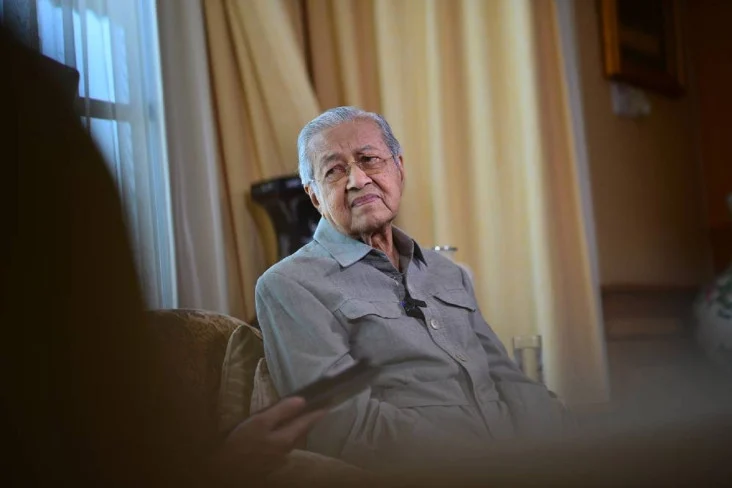
As the world enters a period of profound uncertainty, former Malaysian Prime Minister Mahathir Mohamad has once again delivered a sharp and uncompromising assessment of global politics. According to Mahathir, the chaos that defined much of 2025 will not end quietly. Instead, he argues that instability will carry forward into 2026, shaping international relations, global markets, and political discourse.
More importantly, Mahathir places a significant portion of the blame on Donald Trump, whose political influence, rhetoric, and legacy continue to affect global dynamics. While some leaders choose cautious diplomacy, Mahathir speaks bluntly. Consequently, his comments have reignited debates about leadership, power, and responsibility in a rapidly changing world.
This article explores Mahathir’s warning in depth, examines why he sees Trump as a central figure behind global disorder, and analyzes what the continuation of chaos into 2026 could mean for the international community.
Mahathir Mohamad: A Veteran Voice in Global Politics
Mahathir Mohamad is not a conventional political commentator. As one of Asia’s longest-serving leaders, he has observed global power shifts for decades. Therefore, his views carry historical context and strategic depth.
Throughout his career, Mahathir has consistently criticized:
- Western dominance in global institutions
- The misuse of power by major nations
- Economic systems that favor the strong over the weak
Because of this background, his warnings often extend beyond short-term political cycles. Instead, he focuses on long-term consequences.
Understanding the “Chaos of 2025”
Before addressing 2026, Mahathir emphasizes that 2025 marked a turning point. According to him, the year exposed deep fractures in the global order.
Political Polarization Intensified
In many countries, political divisions grew sharper. Governments struggled to maintain unity, while opposition movements gained momentum. As a result, compromise became increasingly difficult.
Economic Uncertainty Expanded
At the same time, global markets experienced volatility. Trade tensions, inflationary pressures, and shifting supply chains created widespread anxiety. Consequently, many nations found it difficult to plan long-term economic strategies.
Diplomatic Norms Weakened
Furthermore, diplomatic norms eroded. Countries increasingly prioritized unilateral decisions over multilateral cooperation. This shift, Mahathir argues, undermined trust between nations.
Why Mahathir Believes Chaos Will Continue into 2026
Mahathir does not view chaos as a temporary condition. Instead, he sees it as a structural problem rooted in leadership styles and global power imbalances.
According to him, unresolved issues from 2025 will naturally spill into 2026 because:
- Political divisions remain unaddressed
- Economic inequalities persist
- International institutions struggle to enforce cooperation
Therefore, without meaningful change, instability becomes self-perpetuating.
Donald Trump’s Role in Mahathir’s Analysis
Central to Mahathir’s argument is Donald Trump’s enduring influence. Even outside formal office at various points, Trump’s approach to politics continues to shape global narratives.
The Politics of Confrontation
Mahathir criticizes Trump’s confrontational style. Instead of seeking consensus, Trump often framed politics as a zero-sum game. Consequently, this mindset encouraged confrontation rather than cooperation.
Undermining Multilateralism
Moreover, Trump repeatedly questioned the value of international alliances and agreements. According to Mahathir, this attitude weakened global institutions designed to manage crises collectively.
Normalizing Political Aggression
Additionally, Trump’s rhetoric normalized aggressive political behavior. As a result, other leaders felt emboldened to adopt similar tactics, increasing global tension.
The Ripple Effect of Trump’s Leadership Style
Mahathir argues that leadership styles do not exist in isolation. Instead, they influence global behavior patterns.
When a powerful figure prioritizes nationalism over cooperation, other leaders often follow. Consequently, the world experiences:
- Reduced diplomatic dialogue
- Increased trade conflicts
- Heightened geopolitical rivalry
From Mahathir’s perspective, Trump accelerated these trends, and their effects did not disappear with election cycles.
Global Power Shifts and the Crisis of Leadership
Beyond Trump, Mahathir highlights a broader crisis of leadership. Many global leaders, he argues, prioritize short-term popularity over long-term stability.
As a result:
- Policies become reactive rather than strategic
- International trust deteriorates
- Crises escalate instead of being resolved
Therefore, the chaos of 2025 reflects deeper systemic weaknesses rather than isolated events.
The Impact on Developing Nations
Mahathir consistently emphasizes the consequences for developing countries. While powerful nations can absorb shocks, weaker economies suffer disproportionately.
According to him:
- Economic instability reduces growth opportunities
- Political chaos discourages foreign investment
- Social tensions increase as inequality widens
Thus, continued global disorder into 2026 threatens to widen the gap between rich and poor nations.
Asia’s Perspective on Western Political Turmoil
As an Asian leader, Mahathir offers a distinct viewpoint. He argues that Western political turmoil increasingly affects Asia’s economic and security landscape.
For example:
- Trade disruptions affect export-driven economies
- Military tensions influence regional security
- Financial instability impacts currency markets
Therefore, chaos in one part of the world rarely stays contained.
Media, Misinformation, and Political Chaos
Mahathir also criticizes the role of modern media. In his view, misinformation amplifies chaos rather than clarifying issues.
Social media platforms, in particular:
- Spread emotionally charged narratives
- Encourage polarization
- Reward sensationalism over accuracy
Consequently, political leaders like Trump benefit from media dynamics that favor controversy.
The Psychological Impact of Prolonged Global Chaos
Beyond economics and politics, Mahathir highlights the psychological toll of continuous instability.
Citizens around the world experience:
- Political fatigue
- Distrust in institutions
- Anxiety about the future
As a result, societies become more vulnerable to extreme narratives and populist leaders.
Why 2026 Matters More Than It Appears
Mahathir believes 2026 could become a defining year. Either the world begins repairing damaged institutions, or chaos becomes the new normal.
If current trends continue:
- International cooperation may weaken further
- Global conflicts could intensify
- Economic recovery may slow
Therefore, leadership decisions in 2026 will carry long-lasting consequences.
Can the World Reverse the Trend?
Despite his criticism, Mahathir does not completely abandon hope. He argues that meaningful change remains possible if leaders commit to cooperation.
Key steps include:
- Rebuilding trust in multilateral institutions
- Encouraging responsible political rhetoric
- Addressing inequality at both national and global levels
However, such changes require courage and long-term vision.
Lessons from History
Mahathir often references history to support his arguments. Periods of global instability, he notes, usually result from unchecked power and poor leadership.
History shows that:
- Cooperation prevents large-scale conflict
- Isolationism increases instability
- Responsible leadership stabilizes societies
Thus, ignoring these lessons risks repeating past mistakes.
Reactions to Mahathir’s Statement
Mahathir’s comments sparked mixed reactions. Supporters praised his honesty, while critics accused him of oversimplifying complex issues.
Nevertheless, his words resonated widely because they addressed underlying anxieties shared by many around the world.
The Broader Debate About Responsibility
While Mahathir points to Trump as a key culprit, the broader debate continues. Some argue that global chaos results from multiple factors, including technological change, economic inequality, and geopolitical rivalry.
However, Mahathir insists that leadership choices amplify or mitigate these forces. Therefore, individuals in power matter more than many admit.
Conclusion
Mahathir Mohamad’s warning that the chaos of 2025 will continue into 2026 serves as a stark reminder of the fragile state of global politics. By identifying Donald Trump as a central figure behind this instability, Mahathir challenges the world to reflect on the consequences of confrontational leadership and weakened cooperation.
Ultimately, his message extends beyond one individual. It calls for responsible leadership, renewed multilateralism, and long-term thinking. As 2026 approaches, the question remains whether global leaders will heed this warning—or allow chaos to define yet another year.