
Utara’DAILY: What Is Israel’s Purpose in Recognizing Somaliland? Here’s an In-Depth Analysis
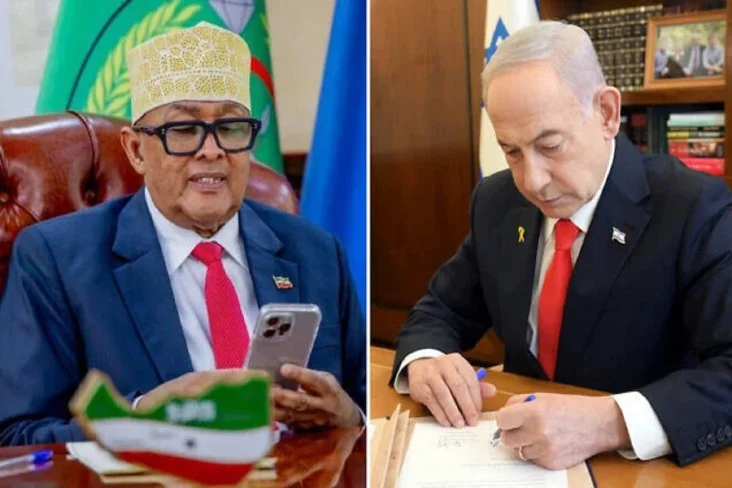
Israel’s reported interest in recognizing Somaliland, a self-declared but internationally unrecognized state in the Horn of Africa, has sparked intense geopolitical debate. Although no official announcement has confirmed full diplomatic recognition, repeated signals and strategic discussions continue to attract global attention.
Therefore, analysts now ask a critical question: What is Israel’s purpose in recognizing Somaliland? The answer involves regional security, maritime strategy, diplomatic leverage, and shifting global alliances. Moreover, the issue reflects broader transformations in Middle Eastern and African geopolitics.
This Utara’DAILY analysis explores the political, strategic, economic, and security motivations behind Israel’s potential recognition of Somaliland, while also examining the risks, controversies, and international reactions.
Understanding Somaliland’s Political Status
Somaliland declared independence from Somalia in 1991 following the collapse of the Somali central government. Since then, it has operated with its own government, currency, military, and elections.
However, despite relative stability, no United Nations member formally recognizes Somaliland as a sovereign state. Consequently, it exists in diplomatic limbo.
Nevertheless, Somaliland continues seeking international legitimacy, especially from influential global actors.
Why Somaliland Matters Geopolitically
Somaliland occupies a strategic location along the Gulf of Aden, one of the world’s most critical maritime corridors. This waterway connects the Red Sea to the Indian Ocean and supports global trade routes linking Asia, Europe, and Africa.
Therefore, control or influence in this region carries immense strategic value.
Moreover, Somaliland sits near volatile areas affected by piracy, terrorism, and regional rivalry.
Israel’s Expanding Diplomatic Footprint in Africa
Over the past decade, Israel has intensified diplomatic engagement across Africa. It has restored relations with several African states and expanded economic and security cooperation.
Therefore, potential engagement with Somaliland fits a broader pattern rather than an isolated move.
Additionally, Israel seeks partners that can offer strategic access and political support in international forums.
Strategic Maritime Interests in the Red Sea Region
One major reason behind Israel’s interest lies in maritime security. Israel depends heavily on sea lanes for trade, energy imports, and military mobility.
Consequently, influence near the Bab el-Mandeb Strait strengthens Israel’s strategic depth.
By engaging Somaliland, Israel could gain logistical access or intelligence advantages near this crucial chokepoint.
Countering Regional Adversaries
Israel continuously monitors Iranian influence across the Middle East and Africa. Iran has reportedly sought influence in the Red Sea region to pressure Israel indirectly.
Therefore, strengthening ties with actors near strategic maritime routes limits adversarial maneuvering.
In this context, Somaliland could serve as a geopolitical counterweight.
Security Cooperation and Intelligence Value
Somaliland maintains relatively effective security forces compared to surrounding regions. It actively combats piracy and extremist threats.
Therefore, security cooperation with Somaliland could provide Israel with valuable intelligence-sharing opportunities.
Moreover, cooperation enhances regional stability, which aligns with Israel’s broader security doctrine.
Diplomatic Leverage in International Arenas
Recognizing Somaliland could generate diplomatic goodwill. Somaliland seeks legitimacy desperately, and recognition from Israel would represent a significant breakthrough.
In return, Israel could gain diplomatic support in international forums such as the United Nations.
Therefore, recognition functions as a form of strategic bargaining.
Economic and Technological Opportunities
Beyond security, economic interests also matter. Somaliland seeks foreign investment in ports, energy, agriculture, and telecommunications.
Israel specializes in:
- Water management
- Agriculture technology
- Cybersecurity
- Infrastructure development
Therefore, economic cooperation could benefit both sides.
The Role of Ports and Logistics
The Port of Berbera stands as Somaliland’s most valuable asset. It already attracts international investment due to its location.
Israel could view Berbera as a potential logistics hub for trade and security operations.
Consequently, port access strengthens Israel’s regional reach.
How This Impacts Somalia
Somalia strongly opposes any recognition of Somaliland. The Somali government views Somaliland as an integral part of its territory.
Therefore, Israeli recognition would strain relations with Mogadishu.
Additionally, it could complicate Israel’s engagement with the African Union and Arab League members.
Regional Reactions in the Horn of Africa
Neighboring countries watch developments closely. Ethiopia maintains strong economic ties with Somaliland, while Djibouti competes for port dominance.
Therefore, Israeli involvement could shift regional balances.
Moreover, Gulf states also maintain interests in the Horn of Africa, adding another layer of complexity.
The Arab World and Diplomatic Sensitivities
Although some Arab states normalized relations with Israel under the Abraham Accords, others remain cautious.
Recognizing Somaliland might anger Arab allies that support Somalia’s territorial integrity.
Therefore, Israel must weigh diplomatic costs carefully.
Legal and International Recognition Challenges
International law generally favors existing borders. Recognizing Somaliland could set a precedent for other separatist regions.
Therefore, global powers hesitate.
Israel itself has historically faced territorial recognition disputes, making this decision even more sensitive.
The Domestic Political Angle in Israel
Domestic politics also influence foreign policy decisions. Israeli leaders may see strategic value in bold diplomatic moves.
However, internal debates weigh security benefits against diplomatic backlash.
Therefore, recognition remains controversial even within Israel.
Somaliland’s Perspective and Expectations
From Somaliland’s viewpoint, Israeli recognition would represent international validation.
It could open doors to further recognition and investment.
Therefore, Somaliland actively courts Israeli interest through diplomatic channels.
Risks of Escalating Regional Tensions
Any recognition carries risks. Somalia could retaliate diplomatically or seek support from Israel’s rivals.
Additionally, militant groups could exploit tensions.
Therefore, stability considerations remain central.
Comparison With Other Unrecognized States
Other regions, such as Kosovo or Northern Cyprus, demonstrate how selective recognition shapes geopolitics.
However, Somaliland’s case differs due to its long-term stability.
Therefore, Israel may see it as a “low-risk” recognition candidate.
The United States Factor
Israel often coordinates closely with the United States. Washington currently supports Somalia’s territorial integrity.
Therefore, Israeli recognition without US backing could create friction.
However, shifting US priorities might alter calculations in the future.
Strategic Timing and Global Uncertainty
Global power competition intensifies. The Red Sea region becomes increasingly militarized.
Therefore, timing matters.
Israel may delay formal recognition while deepening informal ties.
Soft Power and Development Diplomacy
Beyond security, Israel promotes soft power through development aid and technology transfer.
Somaliland offers a platform to showcase these capabilities.
Therefore, recognition could amplify Israel’s image as a regional development partner.
Long-Term Vision for Regional Influence
Israel’s long-term strategy focuses on diversifying partnerships beyond traditional allies.
Africa represents a growing diplomatic frontier.
Therefore, Somaliland fits into a broader vision of regional influence.
Ethical and Normative Considerations
Recognition raises ethical questions about sovereignty, self-determination, and international norms.
Israel must consider whether recognition aligns with its stated commitment to international law.
Therefore, moral considerations intertwine with strategic ones.
Media Narratives and Public Perception
Media coverage shapes public understanding. Some frame recognition as strategic genius, while others warn of destabilization.
Therefore, narrative control matters.
Public opinion influences policy sustainability.
The Likelihood of Formal Recognition
Despite speculation, formal recognition remains uncertain.
Israel may continue engagement without official recognition.
Therefore, ambiguity offers flexibility.
What Recognition Would Mean in Practice
Recognition could involve:
- Diplomatic offices
- Security cooperation
- Trade agreements
However, full embassies may not appear immediately.
Therefore, gradualism remains likely.
Implications for Global Diplomacy
If Israel recognizes Somaliland, other states may reconsider their positions.
Therefore, one decision could trigger broader change.
This potential domino effect explains widespread caution.
Conclusion: Strategy Over Symbolism
In conclusion, Israel’s potential recognition of Somaliland reflects strategic calculation rather than symbolic diplomacy.
Security interests, maritime access, regional influence, and diplomatic leverage all shape Israel’s considerations. However, risks involving Somalia, Arab relations, and international law remain significant.
Therefore, Israel appears to balance engagement with caution. Whether recognition becomes reality or remains strategic signaling, Somaliland already occupies a meaningful place in Israel’s geopolitical thinking.
Utara’DAILY will continue monitoring developments as the Horn of Africa increasingly becomes a focal point of global strategic competition.