
Utara’DAILY: Goodbye to 24 Hours a Day? Humans May Experience 25-Hour Days on Earth
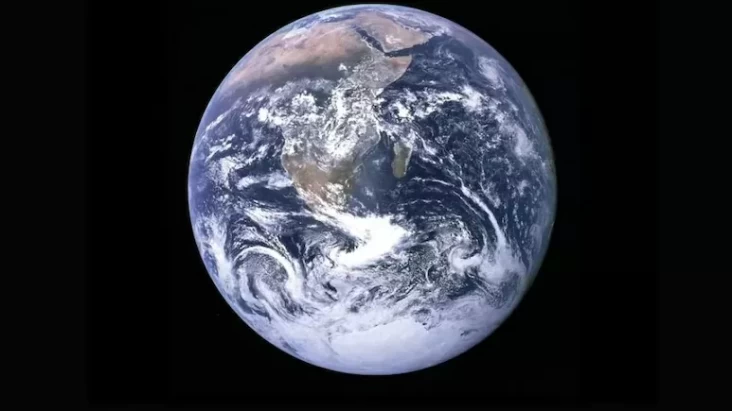
For centuries, humans have organized life around a 24-hour day. Clocks, calendars, work schedules, and biological rhythms all depend on this familiar cycle. However, scientists now confirm that Earth’s rotation is slowly changing. As a result, the idea of a 25-hour day no longer belongs solely to science fiction. Instead, it represents a real, measurable process already underway.
Moreover, while this change will not happen overnight, its implications stretch far into humanity’s future. Therefore, understanding why Earth’s days are gradually getting longer matters more than most people realize.
Why Earth Has a 24-Hour Day
Earth completes one rotation on its axis approximately every 24 hours. This rotation defines the length of a day and creates the cycle of day and night.
However, Earth’s rotation does not remain perfectly constant. Gravitational interactions, internal dynamics, and cosmic forces subtly influence rotational speed. Consequently, the length of a day slowly changes over time.
Thus, the 24-hour day represents a temporary stage in Earth’s long history.
Earth’s Rotation Is Slowing Down
Scientists have confirmed that Earth’s rotation is gradually slowing. This slowdown occurs at an extremely small rate—milliseconds per century. Nevertheless, over millions of years, these tiny changes accumulate.
As a result, Earth’s days grow longer. Therefore, a future where a day lasts 25 hours becomes scientifically plausible, even inevitable.
Time, in this sense, literally stretches.
The Moon’s Role in Slowing Earth Down
The Moon plays the most significant role in Earth’s rotational slowdown. Its gravitational pull creates tidal forces on Earth’s oceans.
These tides generate friction, which transfers energy away from Earth’s rotation. Consequently, Earth spins slightly slower while the Moon slowly moves farther away.
Therefore, the Moon directly contributes to the gradual lengthening of Earth’s day.
Tidal Friction and Energy Loss
Tidal friction occurs when ocean water moves against Earth’s surface. This movement dissipates energy as heat.
Moreover, the process repeats constantly. As a result, Earth loses rotational energy continuously.
Although the effect seems negligible daily, its long-term impact proves substantial.
Geological Evidence of Shorter Days in the Past
Geological records reveal that Earth’s days were much shorter millions of years ago. Fossilized coral growth rings provide key evidence.
Scientists have discovered that ancient corals recorded more daily growth cycles per year. Consequently, Earth once experienced days lasting less than 24 hours.
Therefore, the planet’s rotation has changed dramatically throughout history.
When Earth Had 22-Hour Days
Hundreds of millions of years ago, Earth completed a rotation faster than today. Back then, days lasted approximately 22 hours.
As a result, a year contained more days. However, total annual sunlight exposure remained similar.
This historical perspective confirms that Earth’s rotation evolves naturally.
Atomic Clocks Reveal Modern Changes
Modern technology allows scientists to measure Earth’s rotation with extreme precision. Atomic clocks detect changes down to microseconds.
These measurements confirm that Earth’s rotational speed fluctuates slightly from year to year. However, the long-term trend remains a gradual slowdown.
Therefore, science now tracks Earth’s changing day length in real time.
Leap Seconds: A Human Adjustment to Planetary Change
Because Earth’s rotation slows, timekeeping systems require adjustment. Leap seconds exist to synchronize atomic time with Earth’s actual rotation.
Occasionally, authorities add one second to global timekeeping systems. Consequently, clocks remain aligned with Earth’s position relative to the Sun.
Leap seconds represent humanity adapting to planetary physics.
Could Earth Really Have a 25-Hour Day?
Yes, Earth could eventually experience a 25-hour day. However, this change will not occur anytime soon.
Scientists estimate that adding one full hour to Earth’s day would require tens of millions of years. Therefore, current generations will not experience this shift directly.
Nevertheless, the process continues relentlessly.
How Long Would It Take?
At the current rate of slowdown, Earth’s day length increases by roughly 1.7 milliseconds per century.
Consequently, reaching a 25-hour day would take approximately 140 million years. While this timeframe exceeds human civilization’s age, it remains short in geological terms.
Time, after all, works differently on a planetary scale.
Biological Rhythms and Circadian Clocks
Life on Earth evolved around the 24-hour cycle. Humans, animals, and plants rely on circadian rhythms to regulate sleep, metabolism, and behavior.
If Earth’s day lengthened significantly, biological systems would need to adapt. However, evolution operates slowly.
Therefore, gradual changes allow life to adjust over millions of years.
How Humans Might Adapt to Longer Days
Humans already demonstrate flexibility in sleep patterns. Shift work, time zones, and artificial lighting show our adaptability.
As days lengthen gradually, biological clocks would slowly recalibrate. Consequently, a 25-hour day might feel normal to future humans.
Adaptation follows exposure and time.
Technology Could Buffer the Effects
Technology further reduces dependence on natural light cycles. Artificial lighting, climate control, and digital timekeeping shape daily life.
Therefore, even significant changes in day length might not disrupt society dramatically.
Human innovation often outpaces environmental change.
Impact on Climate Patterns
Earth’s rotation affects atmospheric circulation. Changes in rotation speed could influence wind patterns, weather systems, and climate dynamics.
However, gradual changes allow climate systems to adjust. Therefore, catastrophic disruption remains unlikely.
Instead, climate would slowly evolve alongside rotation.
Longer Days and Temperature Extremes
Longer days could slightly increase temperature variation between day and night.
However, the slow pace of change allows ecosystems to adapt gradually. As a result, extreme impacts remain minimal over human timescales.
Nature prefers gradual transitions.
The Sun’s Influence on Earth’s Time
Although Earth’s rotation defines the day, the Sun influences timekeeping through its apparent movement.
As Earth slows, solar time adjusts accordingly. Consequently, noon remains when the Sun reaches its highest point.
Thus, daily rhythms remain anchored to solar position.
Earth Is Not Unique in Rotational Change
Other planets experience rotational changes as well. Mars, for example, has a day slightly longer than 24 hours.
Meanwhile, Venus rotates extremely slowly, resulting in days longer than its years.
Therefore, rotational variation remains common across the solar system.
Mars and the 24.6-Hour Day
Mars completes one rotation in about 24.6 hours. Interestingly, this similarity makes Mars appealing for human exploration.
Astronauts adapt relatively easily to the Martian day, known as a sol.
This example shows that humans can adjust to different day lengths.
Lessons From Planetary Science
Planetary science reveals that timekeeping remains flexible. Earth’s 24-hour day represents a current convenience, not a universal rule.
Therefore, a future with longer days would align with broader cosmic patterns.
Change defines planetary evolution.
Cultural Implications of Longer Days
Human culture strongly ties itself to time. Work schedules, holidays, and traditions rely on daily cycles.
If days lengthened gradually, culture would adapt organically. New norms would emerge without dramatic disruption.
Culture evolves alongside environment.
Work, Productivity, and a 25-Hour Day
A longer day might alter work-life balance. People could distribute activities differently.
However, productivity depends more on social structure than day length. Therefore, a 25-hour day would not automatically change human behavior.
Society shapes time, not the other way around.
Psychological Effects of Time Perception
Perception of time influences mental health. However, gradual change minimizes psychological strain.
Because humans adapt continuously, extended days would feel natural to future generations.
Normality adjusts with experience.
Religious and Philosophical Reflections on Time
Many belief systems consider time sacred. Changes in Earth’s rotation could inspire new philosophical perspectives.
Moreover, humanity might reassess its relationship with cosmic time.
Science often reshapes spiritual reflection.
Education and Timekeeping in the Future
Education systems might teach future students about historical day lengths.
Understanding Earth’s evolving rotation would become part of basic scientific literacy.
Knowledge connects generations across time.
The Difference Between Scientific Reality and Viral Claims
Some viral claims exaggerate the idea of a sudden 25-hour day. However, science clearly rejects sudden changes.
Earth will not abruptly gain an extra hour. Instead, change occurs over immense timescales.
Accuracy matters in public understanding.
Why the 24-Hour Day Will Not Disappear Suddenly
Earth’s rotation follows physical laws. No known mechanism could rapidly add an hour to the day.
Therefore, fears of sudden disruption remain unfounded.
Science favors gradual processes.
The Role of Earthquakes and Rotation
Large earthquakes can slightly alter Earth’s rotation. However, these changes measure microseconds, not hours.
Consequently, even major seismic events cannot significantly affect day length.
Natural disasters do not rewrite time.
Long-Term Future of Earth’s Rotation
In the far future, Earth may become tidally locked with the Moon. In that scenario, one side would always face the Moon.
However, this outcome lies billions of years away. Long before then, other cosmic changes will dominate Earth’s fate.
Time stretches beyond imagination.
Why This Topic Captures Public Attention
The idea of a 25-hour day fascinates people because it challenges a fundamental assumption of daily life.
Moreover, it reminds humanity that even basic constants evolve.
Curiosity drives engagement with science.
Science Communication and Responsibility
Scientists and media must communicate such topics carefully. Sensationalism can distort public understanding.
Therefore, clarity and context remain essential.
Education builds trust in science.
What This Means for Humanity Today
Practically, nothing changes today. Humans will continue living with 24-hour days.
However, awareness of Earth’s dynamic nature fosters humility.
The planet changes whether we notice or not.
A Reminder of Earth’s Living System
Earth behaves like a living system, constantly adjusting and evolving.
Its rotation reflects interactions among oceans, atmosphere, and celestial bodies.
Understanding these systems deepens respect for our planet.
Conclusion: Time Is Not as Fixed as It Seems
In conclusion, the idea of saying goodbye to a 24-hour day is not fantasy but science grounded in physics and observation. Earth’s rotation is slowing, and one day—millions of years from now—humans or their descendants may experience 25-hour days.
Although this change will not affect modern life, it reveals a profound truth: time itself evolves. Therefore, humanity lives not in a static world but in a dynamic universe where even the length of a day slowly transforms.
Ultimately, Earth’s changing rotation reminds us that patience, adaptation, and perspective define survival across cosmic time.