Utara’DAILY: A Drone Attack on Putin’s Residence Could Trigger a Nuclear War, Here’s Why
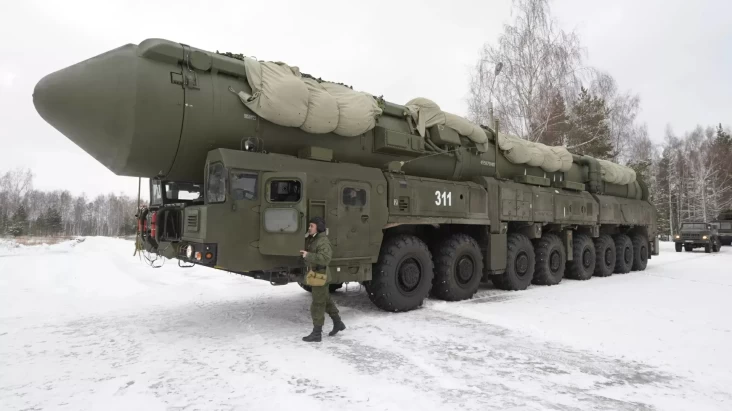
The idea that a single drone attack could ignite a nuclear war sounds dramatic. However, when that hypothetical attack targets the residence of Russian President Vladimir Putin, the danger becomes alarmingly real. In today’s volatile geopolitical environment, symbolism, perception, and reaction speed matter as much as physical damage. Therefore, even a limited drone strike could unleash consequences far beyond its scale.
Moreover, Russia’s nuclear doctrine, its leadership structure, and its history of security paranoia combine to create a uniquely dangerous scenario. Consequently, understanding why such an incident could escalate into nuclear conflict requires careful analysis rather than sensationalism.
Why Symbolic Targets Matter More Than Physical Damage
In modern warfare, symbolism often outweighs tactical outcomes. A drone attack on Putin’s residence would represent more than an attempted strike; it would symbolize a direct assault on the Russian state.
Therefore, Russian leadership would likely interpret such an act as an existential threat. Moreover, adversaries might not intend escalation, yet perception alone could drive catastrophic decisions.
As a result, symbolism transforms a small incident into a strategic crisis.
Russia’s View of Leadership as State Survival
Russia’s political culture closely links leadership with national survival. Unlike many Western democracies, Russia concentrates power heavily around the presidency.
Consequently, an attack on Putin’s residence would not appear as a personal threat alone. Instead, authorities would frame it as an attack on sovereignty, stability, and national continuity.
Therefore, retaliation would likely follow swiftly and forcefully.
The Role of Russia’s Nuclear Doctrine
Russia’s nuclear doctrine allows nuclear weapon use under specific circumstances. One such condition involves threats to the state’s existence or leadership command structure.
Although a drone attack might not destroy military assets, it could trigger fears of decapitation strikes. As a result, Russian strategists might perceive the attack as the opening move of a broader campaign.
Thus, nuclear escalation becomes a conceivable response.
Decapitation Strike Anxiety and Rapid Escalation
Decapitation strikes aim to eliminate leadership quickly. Russia has long feared such strategies, particularly from technologically advanced adversaries.
Therefore, any strike near Putin’s residence would amplify those fears. Moreover, Russia’s early-warning systems operate on compressed timelines.
Consequently, decision-makers might feel pressured to act before confirming intentions. This pressure dramatically increases the risk of miscalculation.
Drone Warfare Has Changed the Rules
Drones blur traditional distinctions between minor attacks and strategic threats. They are inexpensive, precise, and difficult to attribute immediately.
Moreover, drones can penetrate defenses once thought secure. As a result, leadership compounds face new vulnerabilities.
Therefore, a drone attack near Putin would shatter assumptions about security and deterrence.
Attribution Problems Increase the Danger
One of the most dangerous aspects of drone attacks involves attribution. Identifying who launched the drone often takes time.
Meanwhile, leaders must decide how to respond under uncertainty. Consequently, Russia might suspect state-backed involvement even if non-state actors carried out the attack.
Thus, uncertainty itself becomes a trigger for escalation.
The Kremlin’s Security Psychology
The Kremlin operates under deep-seated suspicion. Historically, Russian leadership expects betrayal, covert action, and external plots.
Therefore, even limited incidents receive maximal interpretation. Moreover, past assassination attempts and coups reinforce paranoia.
As a result, restraint becomes unlikely in moments of perceived vulnerability.
Domestic Politics and the Need to Appear Strong
Domestic legitimacy also plays a crucial role. Putin’s image relies heavily on strength and control.
Consequently, a perceived failure to respond decisively could undermine authority at home. Therefore, retaliation becomes politically necessary.
This domestic pressure reduces space for diplomatic de-escalation.
Military Command and Control Risks
Russia maintains a highly centralized command structure. In crisis situations, orders may flow rapidly downward.
However, rapid command increases the risk of errors. Additionally, automated or semi-automated systems may interpret threats incorrectly.
Therefore, escalation could occur without deliberate intent.
The Nuclear Deterrence Balance Is Fragile
Nuclear deterrence relies on rational actors and clear communication. However, surprise attacks disrupt both assumptions.
A drone attack on Putin’s residence would introduce ambiguity. Consequently, deterrence stability could collapse temporarily.
In that moment, worst-case thinking dominates decision-making.
Historical Precedents of Near-Miss Escalations
History provides sobering examples. During the Cold War, false alarms nearly triggered nuclear launches.
Although technology has improved, human judgment remains vulnerable. Therefore, modern crises still carry enormous risk.
A drone incident could replicate those near-misses under even tighter timelines.
Why Russia Might Escalate Beyond Proportionality
Russia’s military doctrine emphasizes escalation dominance. The idea involves responding with overwhelming force to deter further attacks.
Therefore, a limited drone strike could provoke disproportionate retaliation. Moreover, escalation may target broader strategic objectives rather than the original attacker.
Thus, the conflict could rapidly expand.
NATO’s Role and the Risk of Alliance Involvement
If Russia suspects NATO involvement, alliance dynamics come into play. Even indirect suspicion could raise tensions.
Consequently, Russia might signal nuclear readiness to deter collective response. Meanwhile, NATO would increase defensive postures.
This cycle dramatically heightens global risk.
Communication Breakdowns During Crisis
Effective communication prevents escalation. However, during sudden attacks, communication channels may fail.
Moreover, cyber interference could disrupt diplomatic lines. Therefore, misunderstandings persist longer.
Without dialogue, escalation becomes more likely.
Media Amplification and Public Pressure
Modern media accelerates crisis dynamics. News spreads instantly, often without verification.
As a result, public opinion hardens quickly. Leaders feel pressure to act decisively rather than cautiously.
Media-driven urgency reduces room for diplomacy.
Strategic Ambiguity and Its Dangers
Ambiguity sometimes stabilizes deterrence. However, during crises, ambiguity becomes dangerous.
If Russia cannot determine intent, it may assume the worst. Consequently, preemptive actions become tempting.
Thus, ambiguity amplifies risk rather than containing it.
The Role of Artificial Intelligence and Automation
Modern defense systems increasingly rely on automation. AI assists in threat detection and response prioritization.
However, AI systems depend on data interpretation. False positives remain possible.
Therefore, automation could accelerate escalation beyond human control.
Cyber and Drone Warfare Intersections
Drone attacks rarely occur alone. They often coincide with cyber operations.
If a drone strike coincides with cyber disruptions, Russia may interpret it as coordinated warfare.
Consequently, escalation thresholds lower dramatically.
International Law and the Gray Zone
Drone attacks often exist in legal gray zones. International law struggles to address attribution and proportional response.
Therefore, norms remain weak. Without clear rules, states rely on force rather than law.
This legal ambiguity fuels instability.
Why Intent Matters Less Than Perception
In crisis escalation, perception outweighs intent. Even accidental incidents can trigger retaliation.
Therefore, attackers cannot rely on limited intent to control outcomes.
Once perception shifts, escalation becomes difficult to stop.
The Psychological Shock of Leadership Vulnerability
An attack on Putin’s residence would shock the Russian elite. It would signal vulnerability at the highest level.
As a result, elite cohesion could tighten around aggressive responses. Fear breeds unity through force.
Thus, escalation may serve internal stabilization goals.
The Speed of Modern Military Response
Modern militaries operate at unprecedented speed. Decisions compress into minutes.
Therefore, leaders may lack time for reflection. Under such pressure, conservative restraint gives way to aggressive action.
Speed becomes the enemy of stability.
Why Nuclear Signaling Might Come First
Before launching nuclear weapons, Russia might engage in nuclear signaling. This includes alerting forces or conducting exercises.
However, such signaling itself raises alarm globally. Consequently, rivals may respond in kind.
The escalation ladder climbs rapidly.
Global Economic Shockwaves
Even the threat of nuclear escalation triggers economic panic. Markets crash, currencies fluctuate, and supply chains break.
Therefore, global pressure intensifies rapidly. However, economic consequences rarely stop military escalation once begun.
Fear spreads faster than diplomacy.
Diplomatic Off-Ramps Become Narrow
As crises escalate, diplomatic off-ramps narrow. Trust erodes quickly.
Moreover, public rhetoric hardens positions. Leaders risk political backlash if they appear weak.
Thus, de-escalation becomes politically costly.
Could Rationality Prevail?
Some argue rational leaders would avoid nuclear war. However, rationality under extreme pressure differs from calm calculation.
Stress, fear, and uncertainty distort judgment. Therefore, rationality alone cannot guarantee restraint.
Systems matter as much as individuals.
Lessons for the International Community
The possibility of nuclear escalation from a drone attack highlights urgent lessons. First, crisis communication channels must remain open.
Second, norms around drone warfare require strengthening. Third, leadership protection should not rely solely on force.
Prevention remains the only safe strategy.
Why Avoiding Such Scenarios Is Critical
Preventing attacks on symbolic leadership targets must become a global priority. Even hypothetical scenarios reveal unacceptable risk.
Therefore, restraint benefits all actors. No strategic gain justifies nuclear danger.
Security requires foresight, not bravado.
Conclusion: A Small Drone, a Catastrophic Risk
In conclusion, a drone attack on Putin’s residence could indeed trigger nuclear war—not because of physical damage, but because of perception, doctrine, and rapid escalation dynamics. Russia’s security psychology, nuclear posture, and leadership-centric system amplify risk dramatically.
Although such a scenario remains hypothetical, its plausibility should alarm policymakers worldwide. Therefore, preventing miscalculation, strengthening communication, and reducing symbolic provocations remain essential.
Ultimately, in a nuclear-armed world, even the smallest spark can ignite an uncontrollable fire.