Utara’DAILY: China Calls War Games Around Taiwan “Hypocritical” After Criticism
Tensions in East Asia have once again captured global attention as China sharply responded to international criticism over its military exercises near Taiwan. Beijing labeled the criticism “hypocritical,” arguing that Western nations routinely conduct similar war games while condemning China’s actions. This response immediately intensified diplomatic debates and raised concerns about regional stability.
Moreover, the dispute highlights deeper geopolitical rivalries that extend far beyond the Taiwan Strait. Consequently, the issue has become a focal point for discussions about sovereignty, military power, and international norms.
Rising Tensions in the Taiwan Strait
The Taiwan Strait has long served as one of the world’s most sensitive geopolitical flashpoints. China considers Taiwan an inseparable part of its territory, while Taiwan maintains its own democratic government and military.
Therefore, any military activity in the region attracts international scrutiny. China’s recent war games, however, triggered especially strong reactions due to their scale and proximity to Taiwan.
Additionally, these drills occurred amid broader global tensions, amplifying their impact.
China’s Official Response to Global Criticism
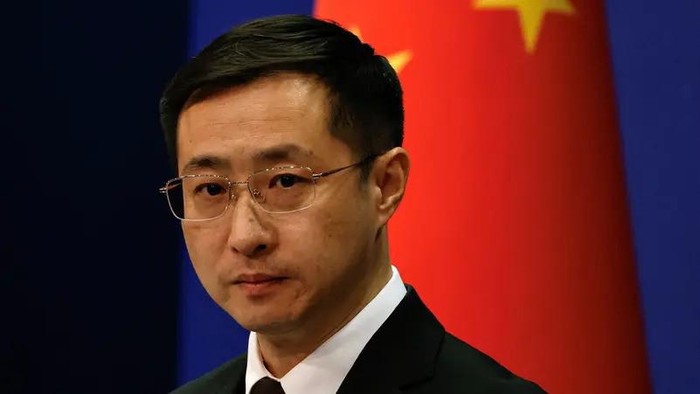
Chinese officials wasted no time responding to criticism from the United States, Japan, and several European countries. Beijing accused these nations of double standards.
According to China’s foreign ministry, countries criticizing China frequently conduct military exercises near other nations’ borders. Therefore, Beijing argued that the outrage lacked moral credibility.
As a result, China framed the criticism as politically motivated rather than principled.
Understanding the War Games
China’s military exercises involved naval vessels, fighter jets, and missile units operating around Taiwan. These drills simulated blockade scenarios and coordinated strikes.
Moreover, Chinese state media described the exercises as routine and defensive. Officials insisted they aimed to safeguard national sovereignty.
However, the scale and intensity of the drills sent a powerful message to both Taiwan and the international community.
Why the Term “Hypocritical” Matters
China’s choice of language was deliberate. By calling the criticism “hypocritical,” Beijing sought to challenge Western narratives about security and stability.
Furthermore, this framing allowed China to shift the conversation. Instead of defending its actions, Beijing questioned the legitimacy of its critics.
Consequently, the debate evolved into a broader argument about global power dynamics.
International Reactions to China’s Statement
The response from other nations was swift. U.S. officials reiterated their commitment to peace and stability in the Taiwan Strait.
Meanwhile, Japan expressed concern about regional security. European leaders emphasized the importance of dialogue and restraint.
Nevertheless, none of these responses softened China’s stance.
The United States and Strategic Interests
The United States maintains a complex relationship with Taiwan. Although Washington does not officially recognize Taiwan as a sovereign nation, it supports Taiwan’s defense capabilities.
Therefore, U.S. officials criticized China’s war games as destabilizing.
However, China countered by highlighting U.S. military exercises in the Indo-Pacific.
Comparing Military Exercises: China vs. the West
Military exercises are common worldwide. NATO conducts regular drills, while the U.S. operates near strategic rivals.
China argued that its exercises near Taiwan mirror actions taken by Western militaries elsewhere.
As a result, Beijing claimed equal legitimacy for its actions.
Taiwan’s Perspective
Taiwan viewed the war games as intimidation. Taiwanese officials emphasized their commitment to peace while strengthening defensive readiness.
Moreover, public opinion in Taiwan reflected concern but also resilience.
Therefore, the drills reinforced Taiwan’s focus on self-defense.
Domestic Messaging Within China
China’s response also served domestic audiences. By rejecting foreign criticism, Beijing projected strength and unity.
Additionally, state media framed the issue as foreign interference.
As a result, the narrative reinforced nationalistic sentiment.
Media Coverage and Information Warfare
Global media outlets covered the war games extensively. Different narratives emerged depending on perspective.
Western media emphasized security risks, while Chinese outlets highlighted sovereignty.
Consequently, information warfare played a significant role.
Economic Implications of Rising Tensions
Geopolitical tensions often affect markets. Following the war games, investors closely watched developments.
Moreover, shipping routes and supply chains near Taiwan remained under scrutiny.
Therefore, the economic stakes added urgency to diplomatic efforts.
Regional Security Concerns
Neighboring countries monitored the situation carefully. Southeast Asian nations called for restraint.
Additionally, Australia and South Korea emphasized regional stability.
As a result, the issue extended beyond China and Taiwan.
Military Signaling and Deterrence
Military exercises often serve as signals. China used the drills to demonstrate capability and resolve.
At the same time, Beijing aimed to deter external intervention.
Therefore, the war games functioned as strategic messaging.
Diplomatic Channels and Dialogue
Despite harsh rhetoric, diplomatic channels remain open. Officials continue engaging through formal and informal mechanisms.
Moreover, multilateral forums provide opportunities for discussion.
Thus, diplomacy continues alongside military posturing.
Historical Context of Cross-Strait Relations
Cross-strait relations have fluctuated for decades. Periods of dialogue alternated with tension.
Understanding this history explains current dynamics.
Therefore, recent events fit into a broader pattern.
Legal and International Law Perspectives
International law complicates the issue. China asserts sovereignty, while others emphasize peace and navigation freedom.
These conflicting interpretations fuel disputes.
Consequently, legal debates accompany political ones.
Technology and Modern Warfare
Modern war games incorporate advanced technology. China showcased precision weapons and coordination.
Additionally, cyber and electronic warfare capabilities likely played a role.
As a result, the exercises highlighted technological advancement.
The Role of Alliances
Alliances shape responses. NATO allies often coordinate messaging, while China strengthens partnerships with Russia and others.
Therefore, the Taiwan issue intersects with global alliance structures.
Public Opinion Worldwide
Public reactions varied. Some audiences criticized China’s actions, while others questioned Western involvement.
Social media amplified these debates.
Thus, public opinion became another battleground.
Risks of Escalation
Military exercises carry inherent risks. Miscalculations or accidents could escalate tensions.
Therefore, observers stressed the importance of communication.
Preventing escalation remains a shared interest.
China’s Long-Term Strategy
China views Taiwan as a core national interest. Military pressure forms part of a long-term strategy.
However, Beijing balances pressure with economic and diplomatic tools.
As a result, strategy remains multifaceted.
Taiwan’s Defense Preparations
Taiwan continues upgrading its defenses. Cooperation with partners enhances readiness.
Moreover, civil defense training has expanded.
Therefore, Taiwan prepares while avoiding provocation.
Global Implications for Peace and Stability
The Taiwan issue affects global stability. Any conflict would disrupt trade and security.
Consequently, international stakeholders remain deeply invested.
The Role of International Organizations
Organizations such as the United Nations emphasize peaceful resolution.
Although their influence is limited, they provide platforms for dialogue.
Thus, multilateral engagement persists.
Strategic Ambiguity and Its Limits
Strategic ambiguity has long characterized Taiwan policy.
However, rising tensions test this approach.
Therefore, policymakers reassess strategies.
Lessons From Recent Crises
Recent global crises demonstrate how quickly tensions escalate.
Therefore, caution and communication are essential.
Lessons inform current responses.
Looking Ahead: Possible Scenarios
Several scenarios exist. Tensions may ease through diplomacy, or military pressure may continue.
However, outright conflict remains unlikely but dangerous.
Thus, vigilance continues.
Conclusion: A Conflict of Narratives and Power
In conclusion, China’s decision to label criticism of its war games around Taiwan as “hypocritical” underscores deep geopolitical divisions. The dispute reflects competing narratives about sovereignty, security, and global norms.
Moreover, the situation illustrates how military actions, rhetoric, and diplomacy intertwine. As a result, the Taiwan Strait remains a critical focal point in international relations.
Ultimately, the world watches closely as China, Taiwan, and global powers navigate one of the most consequential issues of the 21st century.