
Utara’DAILY: Government Rejects Foreign Aid as Flood and Landslide Recovery in Sumatra Is Predicted to Take 30 Years
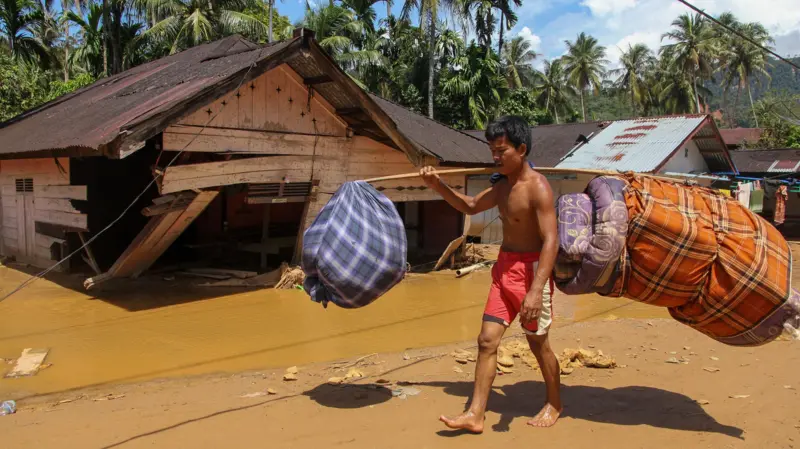
Natural disasters once again tested Indonesia’s resilience after severe floods and landslides devastated multiple regions in Sumatra. As communities struggled to survive the immediate aftermath, the government made a firm decision: it rejected foreign aid, emphasizing national capacity and sovereignty. However, experts simultaneously warned that recovery could take up to 30 years, a projection that sparked intense public debate.
Therefore, this situation presents a complex dilemma. On one hand, national self-reliance remains a core principle. On the other hand, the scale of destruction raises serious questions about long-term recovery, environmental sustainability, and social resilience.
This Utara’DAILY report explores the government’s decision, the scientific basis behind the 30-year recovery estimate, and the broader implications for disaster management in Indonesia.
The Scale of the Disaster in Sumatra
Floods and landslides struck Sumatra with unusual intensity. Heavy rainfall overwhelmed rivers, while unstable hillsides collapsed without warning. Consequently, thousands of homes suffered damage, infrastructure failed, and livelihoods disappeared overnight.
Moreover, transportation routes collapsed, isolating rural communities. Schools closed indefinitely, while healthcare facilities operated under severe strain. Therefore, the disaster quickly transformed from a humanitarian emergency into a long-term development challenge.
Why the Government Rejected Foreign Aid
The government’s decision to reject foreign aid surprised many observers. Officials argued that Indonesia possesses sufficient resources, experience, and institutional capacity to manage disaster recovery independently.
Additionally, leaders emphasized national dignity and sovereignty. They insisted that accepting foreign assistance could complicate coordination and delay implementation.
However, critics questioned whether domestic resources alone could sustain decades-long recovery. Nevertheless, the government maintained its position.
Historical Context of Aid Rejection
Indonesia has previously rejected foreign aid in certain disaster scenarios. After major earthquakes and tsunamis, authorities sometimes limited external involvement to maintain control over logistics and security.
Therefore, the current decision aligns with past policy patterns. However, the projected 30-year recovery timeline introduces new complexity.
Unlike sudden disasters, floods and landslides reshape ecosystems permanently. Consequently, recovery extends beyond rebuilding structures.
Understanding the 30-Year Recovery Prediction
Experts did not arrive at the 30-year estimate arbitrarily. Environmental scientists, urban planners, and disaster risk analysts evaluated soil stability, deforestation levels, and watershed damage.
Moreover, landslides permanently alter terrain. Reforesting slopes, stabilizing soil, and restoring river systems require decades, not years.
Therefore, recovery involves environmental regeneration as much as human reconstruction.
Environmental Degradation as a Key Factor
Deforestation significantly worsened the disaster’s impact. Logging, mining, and land conversion weakened natural barriers that once absorbed rainfall.
Consequently, water flowed rapidly into populated areas. Landslides followed soon after.
Therefore, recovery must address environmental damage. Otherwise, rebuilding risks repeating the same cycle of destruction.
Infrastructure Damage and Long-Term Rebuilding
Infrastructure suffered massive losses. Roads collapsed, bridges washed away, and irrigation systems failed.
Rebuilding infrastructure requires more than repairs. Engineers must redesign systems to withstand future climate extremes.
Moreover, funding large-scale infrastructure takes time. Consequently, progress may occur slowly over decades.
The Human Cost: Displacement and Trauma
Beyond physical damage, the disaster displaced thousands of families. Many lost not only homes but also social networks.
Additionally, psychological trauma affected children, elderly residents, and disaster responders. Therefore, recovery must include mental health services.
Ignoring emotional recovery could undermine long-term resilience.
Economic Impacts on Local Communities
Floods and landslides devastated agriculture, fisheries, and small businesses. Farmers lost crops and fertile soil. Traders lost access to markets.
Consequently, household incomes declined sharply. Poverty risks increased, particularly in rural areas.
Therefore, economic recovery requires targeted support programs.
National Budget Constraints and Priorities
The government pledged to fund recovery through national and regional budgets. However, budget limitations raise concerns.
Disaster recovery competes with education, healthcare, and infrastructure development nationwide.
Therefore, policymakers must balance immediate recovery with long-term national priorities.
Climate Change and Increasing Disaster Frequency
Climate change intensifies rainfall patterns. As a result, floods and landslides occur more frequently and unpredictably.
Therefore, Sumatra’s disaster reflects a broader regional trend.
Ignoring climate adaptation would leave communities vulnerable to repeated disasters.
Disaster Risk Reduction as a Long-Term Strategy
Experts argue that recovery must integrate disaster risk reduction. This approach focuses on prevention, preparedness, and resilience.
For example, zoning regulations can restrict construction in high-risk areas. Early warning systems can reduce casualties.
Therefore, prevention reduces long-term costs.
Community Participation in Recovery
Communities play a crucial role in recovery. Local knowledge helps identify risks and priorities.
Moreover, community involvement increases trust and compliance with relocation plans.
Therefore, recovery policies must empower local residents.
Relocation: A Difficult but Necessary Choice
Some areas may remain unsafe for habitation. Authorities may need to relocate entire communities.
However, relocation disrupts cultural ties and livelihoods.
Therefore, relocation policies must include compensation, consultation, and livelihood support.
The Role of Technology in Recovery
Technology can accelerate recovery. Satellite mapping helps assess damage. Data analytics improves planning.
Moreover, digital platforms enhance transparency in aid distribution.
Therefore, innovation supports accountability and efficiency.
International Cooperation Without Direct Aid
Although the government rejected foreign aid, it still engages in international cooperation.
Knowledge exchange, technical assistance, and research collaboration continue.
Therefore, cooperation does not always require financial aid.
Public Reaction and National Debate
Public opinion remains divided. Some citizens support national self-reliance. Others worry about insufficient resources.
Social media amplified debate, reflecting broader concerns about governance and transparency.
Therefore, communication remains critical.
Media’s Role in Shaping Perception
Media coverage influences public understanding. Accurate reporting highlights challenges and progress.
However, sensationalism can distort reality.
Therefore, responsible journalism supports informed debate.
Lessons From Past Disasters
Indonesia has learned valuable lessons from previous disasters. Community-based preparedness saved lives in later events.
However, recurring disasters reveal persistent vulnerabilities.
Therefore, learning must translate into action.
Education and Awareness as Foundations of Resilience
Disaster education empowers communities. Schools can teach evacuation procedures and environmental stewardship.
Moreover, awareness reduces panic and misinformation.
Therefore, education strengthens long-term resilience.
Governance and Coordination Challenges
Recovery requires coordination across ministries and regions. Overlapping authority can delay action.
Therefore, streamlined governance improves efficiency.
Clear leadership accelerates recovery.
Monitoring Progress Over Decades
A 30-year recovery demands consistent monitoring. Governments change, but recovery must continue.
Therefore, long-term planning frameworks become essential.
Institutional memory ensures continuity.
The Risk of “Recovery Fatigue”
Extended recovery risks public fatigue. Attention fades as new crises emerge.
Therefore, sustained commitment matters.
Regular progress updates maintain accountability.
Social Inequality and Unequal Recovery
Disasters often deepen inequality. Wealthier communities recover faster than poorer ones.
Therefore, recovery policies must prioritize vulnerable groups.
Equity strengthens social cohesion.
Financing Long-Term Recovery
Innovative financing options may help. Public-private partnerships, green bonds, and climate funds offer alternatives.
Therefore, financing diversification reduces fiscal pressure.
Strategic investment accelerates recovery.
The Future of Sumatra’s Development
Recovery reshapes development trajectories. Sustainable planning can transform vulnerability into resilience.
However, short-term fixes risk long-term harm.
Therefore, vision matters.
Balancing Sovereignty and Global Solidarity
The rejection of foreign aid raises broader philosophical questions. Sovereignty matters, but global solidarity also matters.
Therefore, policymakers must balance independence with cooperation.
This balance defines modern disaster governance.
Conclusion: Recovery Beyond Reconstruction
In conclusion, the government’s rejection of foreign aid amid predictions of 30 years of recovery from floods and landslides in Sumatra underscores a profound national challenge.
Moreover, recovery extends beyond rebuilding infrastructure. It involves environmental restoration, social healing, and economic transformation.
Consequently, success depends on long-term commitment, transparent governance, and community participation. As Indonesia confronts climate-driven disasters, Sumatra’s recovery may shape the nation’s future approach to resilience and self-reliance.
Utara’DAILY will continue to follow developments closely, documenting both progress and challenges in the decades ahead.