
Utara’DAILY: Trump Threatens to Use Military Force – Here Are 8 Significances of Greenland to Trump
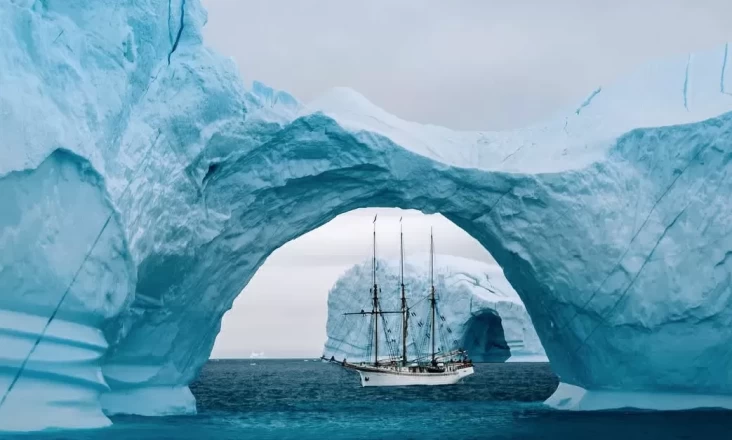
In recent years, global attention has increasingly turned toward the Arctic. Consequently, Greenland has emerged as one of the most strategically significant territories in the world. When former U.S. President Donald Trump openly expressed interest in Greenland—and even hinted at the use of military pressure—many observers reacted with disbelief. However, beneath the controversy lies a complex web of geopolitical, economic, and security interests. Therefore, understanding why Greenland matters to Trump requires a deeper and more structured analysis.
This Utara’DAILY report explores eight major significances of Greenland to Donald Trump, while also examining how Arctic politics, military strategy, and global power competition intersect. Moreover, this article explains why Greenland is no longer a remote island but instead a critical piece in the modern geopolitical chessboard.
1. Greenland as a Strategic Military Gateway
First and foremost, Greenland holds enormous military value. Located between North America and Europe, Greenland sits directly along the shortest air and missile routes between the United States and Russia. Therefore, control or influence over Greenland enhances early-warning capabilities against potential threats.
Moreover, the United States already operates the Pituffik Space Base (formerly Thule Air Base) in northwestern Greenland. This base plays a vital role in missile defense, space surveillance, and Arctic operations. As a result, Trump viewed Greenland not merely as land but as a strategic shield.
Additionally, Arctic ice continues to melt. Consequently, new military routes are opening. In response, global powers increasingly prioritize Arctic dominance. Trump’s military-focused worldview naturally aligned with Greenland’s defensive value.
2. Arctic Power Competition With Russia and China
Secondly, Greenland matters because of rising competition among superpowers. Russia has significantly expanded its Arctic military presence. Meanwhile, China has labeled itself a “near-Arctic state” and invested heavily in polar infrastructure.
Therefore, Trump perceived Greenland as a counterbalance. By strengthening U.S. influence there, America could limit Russian expansion and block Chinese access. Furthermore, Greenland prevents rival powers from establishing strategic footholds near North America.
In contrast to diplomatic multilateralism, Trump preferred direct control or influence. Consequently, Greenland appeared to him as a tangible solution rather than a symbolic alliance.
3. Greenland’s Vast Untapped Natural Resources
Another critical factor involves Greenland’s natural wealth. Beneath its ice-covered surface lie massive reserves of rare earth elements, oil, natural gas, uranium, and precious minerals. These resources are essential for modern technologies, including defense systems, renewable energy, and advanced electronics.
Currently, China dominates the rare earth supply chain. Therefore, Trump viewed Greenland as an opportunity to reduce U.S. dependence on China. Moreover, securing resource access aligns with Trump’s “America First” economic doctrine.
Additionally, as climate change accelerates ice melting, resource extraction becomes more feasible. Consequently, Greenland’s economic importance continues to rise year after year.
4. Control Over Emerging Arctic Shipping Routes
As Arctic ice recedes, new shipping lanes are opening. These routes significantly shorten travel time between Asia, Europe, and North America. Therefore, Greenland sits at the crossroads of future global trade.
Trump understood that whoever controls Arctic transit routes gains economic and strategic advantages. Moreover, Greenland’s geographic position allows monitoring, regulation, and protection of maritime traffic.
Furthermore, Arctic shipping reduces reliance on traditional chokepoints like the Suez Canal. Consequently, Greenland enhances America’s ability to secure global trade stability.
5. Greenland as a Buffer for Homeland Security
From a homeland security perspective, Greenland acts as a buffer zone protecting the U.S. mainland. In military planning, distance matters. Therefore, Greenland extends America’s defensive perimeter far beyond its continental borders.
Additionally, radar systems in Greenland provide early detection against long-range missiles. This capability becomes increasingly vital as hypersonic weapons develop. As a result, Trump viewed Greenland as a frontline defense rather than a distant territory.
Moreover, strengthening Arctic defenses signals deterrence. Consequently, Greenland contributes to strategic stability by discouraging hostile actions.
6. Economic Leverage and Investment Influence
Beyond security, Greenland represents economic leverage. Although Greenland maintains self-rule under Denmark, it seeks foreign investment to develop infrastructure and industry. Therefore, Trump saw an opening for American economic influence.
Instead of allowing China to fund airports, ports, and mining projects, Trump favored U.S. investment. Consequently, economic engagement would naturally translate into political alignment.
Additionally, economic partnerships often precede strategic cooperation. Therefore, Greenland offered long-term influence rather than short-term control.
7. Symbol of American Global Dominance
Trump often framed foreign policy through symbols of strength. Consequently, acquiring or dominating Greenland represented a bold demonstration of U.S. power.
Historically, the United States expanded through territorial acquisitions such as Alaska. Trump frequently referenced this precedent. Therefore, Greenland symbolized continuity with America’s expansionist past.
Moreover, asserting influence in Greenland sends a message to allies and rivals alike. It signals that the U.S. remains proactive rather than reactive. As a result, Greenland fits Trump’s branding of decisive leadership.
8. Domestic Political Messaging and Legacy
Finally, Greenland served domestic political purposes. Trump’s base responded strongly to narratives of strength, security, and economic independence. Therefore, Greenland became a talking point reinforcing these themes.
Additionally, presidents often seek legacy-defining achievements. Trump viewed Greenland as a historic opportunity that could define his foreign policy legacy.
Even controversy itself generated media dominance. Consequently, the Greenland proposal ensured global attention, reinforcing Trump’s image as an unconventional leader.
Why the Military Threat Rhetoric Matters
Although Trump never formally pursued military action, his rhetoric matters. Language shapes diplomacy. Therefore, even suggestions of force signal seriousness and urgency.
Moreover, such rhetoric reflects how geopolitical competition has intensified. In today’s world, strategic territories no longer remain neutral by default. Consequently, Greenland stands at the center of Arctic geopolitics.
Greenland’s Perspective: Not Just a Strategic Asset
Importantly, Greenland is not merely a prize for global powers. Its people seek economic development, environmental protection, and political autonomy. Therefore, any foreign involvement must consider local interests.
Moreover, Greenland balances relationships carefully. While welcoming investment, it resists domination. Consequently, long-term influence requires cooperation rather than coercion.
Conclusion: Greenland as the Arctic Key of the 21st Century
In conclusion, Greenland’s importance to Donald Trump stems from a convergence of military, economic, and geopolitical factors. From missile defense to mineral resources, from Arctic shipping to superpower rivalry, Greenland represents far more than an icy island.
Therefore, Trump’s interest—controversial as it appeared—highlighted a deeper truth: the Arctic is no longer peripheral. Instead, it has become central to global power competition.
As climate change reshapes geography and politics, Greenland will only grow more significant. Consequently, future leaders—American or otherwise—will continue to view Greenland as a strategic cornerstone of the modern world.