
The US Provides Rp 758 Billion in Aid for the Thailand–Cambodia Ceasefire
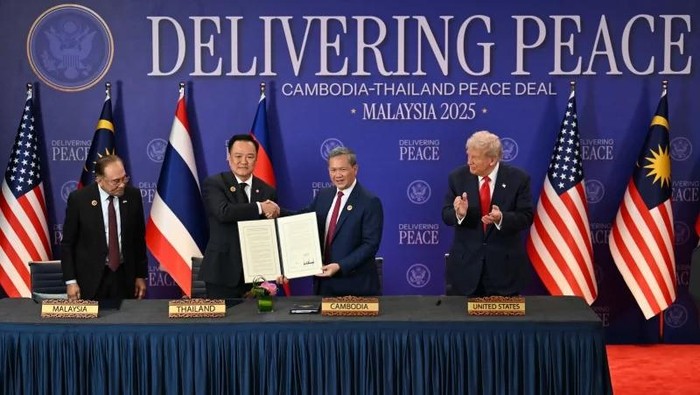
A Strategic Move Toward Peace in Southeast Asia
The United States has taken a significant diplomatic and humanitarian step by providing Rp 758 billion in aid to support the ceasefire between Thailand and Cambodia. This decision comes at a critical moment, as tensions along the shared border between the two Southeast Asian nations have raised concerns about regional stability.
Moreover, the aid package reflects Washington’s broader commitment to conflict prevention, humanitarian assistance, and diplomatic engagement in the Indo-Pacific region. Rather than focusing solely on military solutions, the United States has chosen a path that emphasizes dialogue, reconstruction, and long-term peace.
As a result, this move has drawn attention from regional governments, international observers, and global institutions alike.
Background: Understanding the Thailand–Cambodia Conflict
To fully grasp the importance of the US aid package, it is essential to understand the historical context of tensions between Thailand and Cambodia. For decades, the two countries have experienced intermittent disputes, particularly along their shared border.
Most notably, disagreements over territorial claims near ancient temple complexes have triggered diplomatic crises and, at times, armed clashes. Although both governments have repeatedly expressed commitments to peace, unresolved issues have continued to fuel mistrust.
Therefore, the recent ceasefire represents a fragile but crucial opportunity to reset relations.
The Role of the United States in Regional Diplomacy
The United States has long played an active role in Southeast Asian diplomacy. Through alliances, partnerships, and multilateral forums, Washington seeks to promote stability and cooperation across the region.
In this context, the decision to provide Rp 758 billion in aid aligns with long-standing US foreign policy objectives. Instead of intervening militarily, the US has chosen to support peace-building mechanisms and humanitarian recovery.
Consequently, this approach strengthens diplomatic credibility while reducing the risk of further escalation.
Breaking Down the Rp 758 Billion Aid Package
The aid package reportedly includes funding for humanitarian relief, infrastructure rehabilitation, and ceasefire monitoring mechanisms. By addressing both immediate needs and long-term challenges, the United States aims to create conditions that sustain peace beyond temporary agreements.
Furthermore, a portion of the funds will support displaced communities affected by border tensions. This includes access to food, healthcare, and shelter, which are essential for rebuilding trust among affected populations.
Thus, the aid targets both political stability and human security.
Humanitarian Assistance as a Foundation for Peace
Humanitarian aid often plays a crucial role in post-conflict recovery. In the case of Thailand and Cambodia, border communities have faced disruptions to livelihoods, education, and access to basic services.
By prioritizing humanitarian support, the United States sends a clear message that peace must deliver tangible benefits to ordinary citizens. When people experience improved living conditions, they are more likely to support diplomatic solutions.
As a result, humanitarian assistance becomes a catalyst for long-term reconciliation.
Supporting Ceasefire Monitoring and Compliance
Ceasefires often fail due to lack of monitoring and enforcement. Recognizing this risk, the US aid package includes support for ceasefire verification mechanisms.
These mechanisms may involve third-party observers, technological monitoring tools, and confidence-building measures between Thai and Cambodian forces. By enhancing transparency, the risk of misunderstandings decreases significantly.
Therefore, effective monitoring strengthens the credibility of the ceasefire agreement.
Strengthening ASEAN’s Role in Conflict Resolution
The Thailand–Cambodia ceasefire also highlights the importance of the Association of Southeast Asian Nations (ASEAN). As a regional bloc, ASEAN emphasizes non-interference, dialogue, and consensus.
The US aid initiative complements ASEAN-led efforts rather than replacing them. By supporting regional frameworks, Washington reinforces ASEAN’s central role in maintaining peace.
Consequently, this cooperation enhances regional ownership of conflict resolution processes.
Why the Aid Matters for Regional Stability
Southeast Asia remains a strategically vital region. Major shipping lanes, economic hubs, and geopolitical rivalries converge in this area.
Any escalation between Thailand and Cambodia could disrupt regional trade and security. Therefore, preventing renewed conflict serves not only local interests but also global economic stability.
In this sense, the US aid package represents a preventive investment rather than a reactive response.
The Indo-Pacific Strategy and Peacebuilding
The US Indo-Pacific strategy emphasizes a free, open, and stable region. While much attention focuses on great-power competition, peacebuilding remains a core pillar of this approach.
By supporting the Thailand–Cambodia ceasefire, the United States demonstrates that its strategy includes diplomacy and development, not just deterrence.
As a result, this move counters narratives that portray US engagement as purely militaristic.
Economic Implications of Sustained Peace
Peace directly influences economic growth. Border tensions disrupt trade routes, tourism, and cross-border investment.
With the ceasefire in place, businesses regain confidence, and local economies begin to recover. US aid accelerates this process by funding infrastructure repairs and community development projects.
Thus, economic recovery reinforces peace by reducing incentives for renewed conflict.
Reactions from Thailand and Cambodia
Officials from both Thailand and Cambodia have welcomed the US assistance. Public statements emphasize gratitude and a shared commitment to maintaining the ceasefire.
Moreover, both governments acknowledge that international support helps ease domestic pressures. When external partners contribute resources, governments can focus on diplomacy rather than crisis management.
This positive reception increases the likelihood of sustained cooperation.
International Community Response
Beyond Southeast Asia, the international community has responded positively to the US initiative. Multilateral organizations and allied nations view the aid package as a constructive step toward conflict prevention.
Some analysts suggest that the move sets a precedent for addressing regional disputes through coordinated humanitarian and diplomatic efforts.
Therefore, the initiative may influence future international responses to similar conflicts.
Lessons from Past Ceasefires
History shows that ceasefires require consistent support to succeed. In previous Thailand–Cambodia agreements, lack of follow-through undermined progress.
This time, however, substantial international backing increases the chances of success. By providing financial resources and diplomatic engagement, the United States helps avoid past mistakes.
Thus, lessons learned inform a more resilient peace process.
Balancing Sovereignty and International Assistance
One challenge in providing foreign aid involves respecting national sovereignty. Both Thailand and Cambodia remain sensitive to external influence.
The US approach emphasizes partnership rather than imposition. Aid flows through agreed channels and supports locally driven initiatives.
As a result, the assistance respects sovereignty while promoting shared goals.
Potential Risks and Criticisms
Despite widespread support, some critics question the effectiveness of foreign aid in conflict zones. They argue that funds may face mismanagement or fail to address root causes.
However, transparent monitoring and collaboration with regional institutions help mitigate these risks. Moreover, the cost of inaction often exceeds the investment in peace.
Therefore, the benefits of engagement outweigh potential drawbacks.
The Role of Civil Society and Local Communities
Peacebuilding extends beyond governments. Civil society organizations and local leaders play a vital role in reconciliation.
US aid programs often include funding for community dialogue initiatives and grassroots development. These efforts foster trust and cooperation at the local level.
Consequently, peace becomes more durable when communities actively participate.
Long-Term Vision for Thailand–Cambodia Relations
While the ceasefire marks a significant step, long-term peace requires sustained commitment. Border demarcation, historical grievances, and economic disparities remain unresolved.
The US aid package creates breathing space for diplomacy. During this period, both countries can pursue negotiations without the pressure of active conflict.
Thus, the initiative supports a long-term vision rather than a temporary fix.
Implications for US Credibility in Asia
Actions speak louder than rhetoric in international relations. By backing diplomacy with tangible resources, the United States enhances its credibility as a reliable partner.
This credibility matters as Asian nations navigate complex geopolitical landscapes. When partners trust US intentions, cooperation becomes easier.
As a result, the aid package strengthens US influence through positive engagement.
Comparing Aid-Based and Military Approaches
Military interventions often produce unintended consequences. In contrast, aid-based approaches emphasize prevention and resilience.
The Thailand–Cambodia case illustrates how targeted assistance can stabilize volatile situations. Rather than escalating tensions, aid reduces the likelihood of violence.
Therefore, this model offers valuable lessons for future conflict management.
Media Coverage and Public Perception
Media outlets across Asia and beyond have highlighted the US contribution. Coverage generally frames the aid as a constructive and timely intervention.
Public perception also matters. When citizens see international support for peace, confidence in diplomatic processes increases.
Thus, positive media narratives reinforce political will.
Measuring Success: What Comes Next?
Success will depend on several indicators. These include sustained ceasefire compliance, reduced border incidents, and improved living conditions for affected communities.
The United States and its partners will likely assess progress through regular evaluations. Adjustments may follow based on outcomes.
Therefore, the aid package represents an ongoing commitment rather than a one-time gesture.
Conclusion: Investing in Peace and Stability
The US decision to provide Rp 758 billion in aid for the Thailand–Cambodia ceasefire underscores the power of diplomacy backed by resources. By addressing humanitarian needs, supporting monitoring mechanisms, and reinforcing regional cooperation, the initiative promotes lasting peace.
Ultimately, this approach demonstrates that strategic patience and constructive engagement can prevent conflict more effectively than force. As Southeast Asia continues to evolve, such investments in peace will remain essential for regional and global stability.